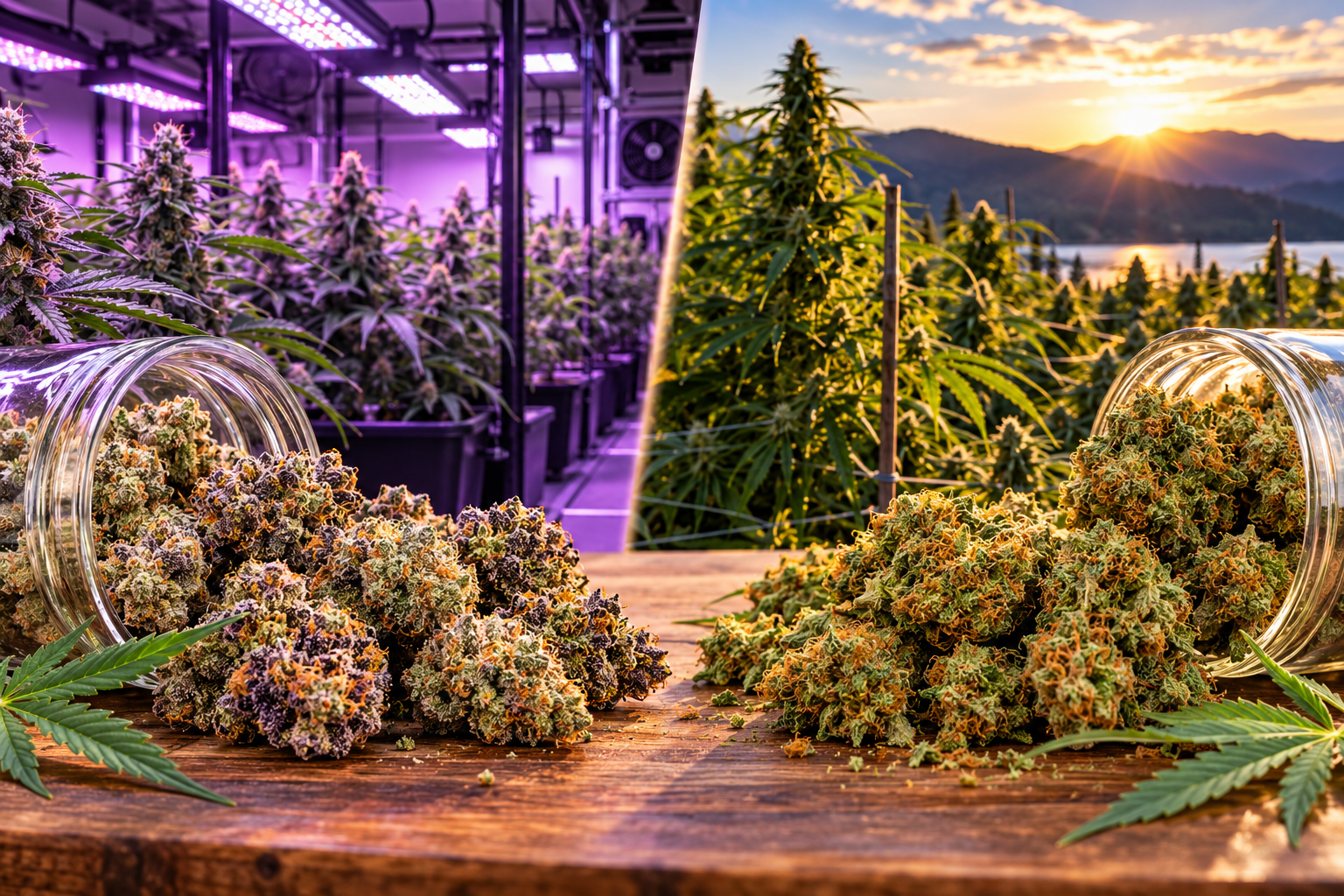
Two cannabis buds can come from the same strain and still look, smell, taste, and even feel surprisingly different. One might feature dense, tightly packed flowers covered in visible trichomes, while another may appear slightly looser, darker, and more rustic. Their aromas and flavors can also vary considerably. One of the biggest reasons for these differences is the environment in which the plants were cultivated.
The Indoor vs Outdoor Weed comparison goes far beyond appearance. Light exposure, temperature, humidity, soil, nutrients, genetics, harvesting, drying, and curing can all influence the final flower. Indoor cultivation gives growers extensive control over environmental conditions, while outdoor cultivation allows cannabis plants to develop under natural sunlight and seasonal conditions.
Neither growing method automatically guarantees superior cannabis. Understanding the differences can instead help consumers recognize why the same genetics may produce noticeably different results.
What Is Indoor Weed?
Indoor weed is cannabis cultivated inside a controlled growing environment. Growers typically use artificial lighting while managing variables such as temperature, humidity, airflow, irrigation, and nutrients.
This degree of control is one of indoor cultivation’s biggest advantages.
Growers can adjust environmental conditions throughout the plant’s life cycle and protect crops from heavy rain, frost, extreme temperatures, and other unpredictable outdoor conditions.
Indoor facilities can also produce cannabis throughout the year rather than depending entirely on natural growing seasons.
However, indoor cultivation requires substantial infrastructure. Lighting, ventilation, climate control, irrigation, and other equipment can increase production costs and energy consumption.
When discussing Indoor vs Outdoor Weed, indoor cultivation is therefore generally associated with greater environmental control rather than automatically higher quality.
What Is Outdoor Weed?
Outdoor cannabis is cultivated primarily using natural sunlight.
Rather than creating an artificial environment around the plants, outdoor growers work with local climate conditions, seasonal changes, soil, rainfall, and available sunlight. Cultivation practices can range from relatively simple field growing to sophisticated outdoor operations using carefully managed irrigation and soil amendments.
One major advantage is sunlight. The sun provides an extremely broad spectrum of light, and cannabis plants grown outdoors can become quite large when conditions are favorable.
Outdoor cultivation can also require less artificial lighting and climate-control equipment.
The trade-off is reduced environmental predictability. Excessive rain, heat, cold, humidity, pests, wildfire smoke, and other environmental factors can affect a crop.
Indoor vs Outdoor Weed: Why Appearance Can Be Different
Appearance is often the first thing consumers notice when comparing Indoor vs Outdoor Weed.
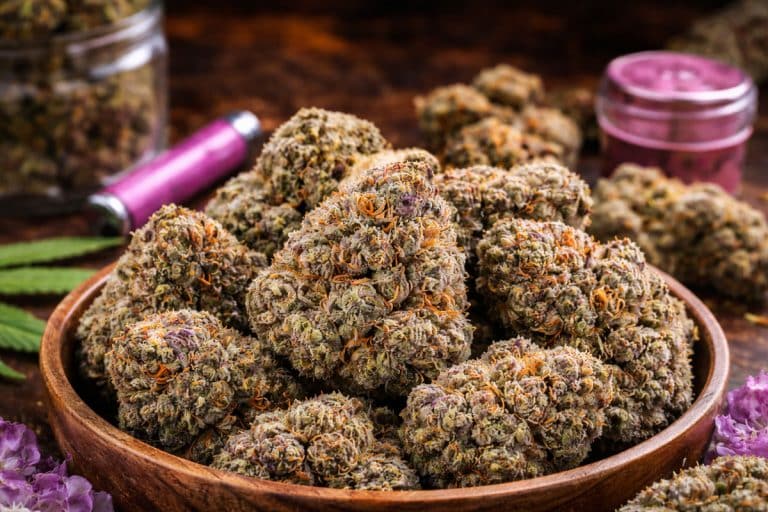
Indoor cannabis is frequently associated with compact, visually polished buds. Controlled lighting and environmental conditions can allow growers to maintain relatively consistent plant development. Indoor flower may display bright coloration and highly visible trichomes, depending on genetics and cultivation.
Outdoor cannabis can sometimes develop larger but less tightly structured flowers. Exposure to wind, sunlight, rain, temperature fluctuations, and other natural conditions can also affect the flower’s exterior appearance.
Outdoor buds may consequently look darker or more weathered in some cases.
These characteristics are general tendencies rather than strict rules. An experienced outdoor cultivator can produce exceptional flower, while poor indoor cultivation can result in disappointing cannabis.
Appearance alone does not reliably establish overall quality.
How Light Changes Cannabis Development
Light represents one of the fundamental differences between indoor and outdoor cultivation.
Outdoor plants receive sunlight, which naturally changes in intensity and duration according to the time of day, weather, location, and season.
Indoor growers instead use cultivation lights and control the photoperiod. Modern grow lights can provide carefully selected light intensity and spectra, allowing cultivators to create repeatable conditions from one crop to another.
This difference helps explain why the same strain can develop somewhat differently across cultivation environments.
Plant genetics establish a range of possible characteristics, but environmental conditions influence how those characteristics are expressed.

Indoor vs Outdoor Weed and Terpenes
Terpenes are aromatic compounds found throughout nature, including in cannabis. They contribute significantly to the characteristic smells and flavors associated with different cannabis cultivars.
Depending on the strain, cannabis may contain aromas reminiscent of citrus, berries, pine, herbs, fuel, earth, flowers, or spices.
When comparing Indoor vs Outdoor Weed, cultivation conditions can influence terpene development and preservation. Temperature, light, humidity, plant health, harvest timing, drying, storage, and curing may all affect the final aromatic profile.
This means two batches carrying the same strain name may not smell identical.
Growing environment is only one variable, however. Genetics and post-harvest handling can be equally important when considering aroma and flavor.
Why the Same Strain Can Taste Different
Imagine growing genetically similar plants in two very different environments.
One is cultivated indoors under carefully controlled lighting, temperature, humidity, and nutrients. The other develops outside under full sunlight, changing temperatures, wind, and natural environmental conditions.
Even with similar genetics, the plants experience different environmental pressures.
Those differences can influence plant development and the chemical composition ultimately present at harvest. After harvest, drying and curing introduce another set of variables.
Poorly dried or improperly stored flower can lose desirable aroma and flavor regardless of how well it was originally grown.
Therefore, when comparing the flavor of Indoor vs Outdoor Weed, cultivation method should not be considered in isolation.
Potency: Is Indoor Weed Stronger?
A common assumption is that indoor cannabis always contains more THC than outdoor cannabis.
It is not that simple.
THC concentration depends on numerous factors, including genetics, cultivation practices, plant health, harvest timing, and processing. Indoor growers may be able to optimize conditions for particular cultivars, but outdoor cannabis can also reach substantial cannabinoid concentrations when genetics and growing conditions are favorable.
A laboratory-tested cannabinoid profile provides more useful information about potency than whether a product was simply labeled indoor or outdoor.
Consumers should also remember that higher THC does not automatically mean better cannabis.
Desired potency varies according to individual tolerance and preferences.
Aroma and Flavor Matter Too
THC receives enormous attention, but cannabis quality involves more than one cannabinoid percentage.
A flower’s aroma and flavor can play a major role in the overall experience. Terpenes and other volatile compounds contribute to these characteristics and may differ significantly between batches.
Freshness is particularly important.
Even carefully cultivated cannabis can lose aroma when exposed to excessive heat, oxygen, light, or unsuitable storage conditions. Proper curing and storage help preserve volatile aromatic compounds.
Consequently, fresh, properly handled outdoor flower may offer a more appealing sensory experience than poorly stored indoor flower, or vice versa.

The Potential Benefits of Indoor Cannabis
Indoor cultivation offers several practical advantages.
Perhaps the most significant is consistency. Growers can recreate similar environmental conditions across multiple cultivation cycles, making it easier to standardize production.
Indoor facilities also allow year-round cultivation in climates where outdoor cannabis cannot grow throughout the year.
Plants are protected from many extreme weather events, while environmental monitoring can give cultivators considerable control over temperature and humidity.
For consumers, these factors may contribute to batches with relatively consistent appearance and other characteristics when cultivation and post-harvest practices are well managed.
The Potential Benefits of Outdoor Cannabis
Outdoor cannabis has its own advantages.
Natural sunlight is abundant and does not require the same artificial-lighting infrastructure as indoor cultivation. Depending on the climate and cultivation system, outdoor growing may therefore require substantially less electricity for lighting and environmental control.
Plants may also have considerably more physical space to grow.
Well-managed outdoor cannabis can produce flavorful, aromatic flower with excellent cannabinoid and terpene profiles. Outdoor cultivation can also make sense for growers seeking large harvests where climate and regulations permit.
For consumers comparing Indoor vs Outdoor Weed, outdoor should not be interpreted as a synonym for low quality. Cultivator skill, genetics, harvest timing, drying, and curing remain critical.
Does Indoor or Outdoor Weed Produce Better Effects?
Growing location alone cannot reliably predict exactly how cannabis will make someone feel.
The experience can be influenced by THC concentration, other cannabinoids, individual tolerance, amount consumed, consumption method, and personal sensitivity.
The same strain name is also not necessarily a guarantee of identical chemical composition between producers or batches.
This is why consumers should consider available cannabinoid information and product details rather than relying exclusively on labels such as indoor, outdoor, indica, or sativa.
Individual responses to cannabis can vary considerably.
How to Recognize Quality Cannabis
Rather than judging cannabis solely by its cultivation method, consider the complete product.
Well-produced flower should generally have an aroma characteristic of its cultivar rather than obvious signs of excessive moisture, mustiness, or contamination. Flowers should also be properly dried and stored.
Trichome coverage and bud structure can provide useful visual information, but extremely attractive cannabis is not automatically the most potent or enjoyable.
Where regulated testing information is available, cannabinoid content and other product information can provide additional context.
Ultimately, Indoor vs Outdoor Weed describes how cannabis was cultivated—not a guaranteed quality grade.
Indoor vs Outdoor Weed: Which Should You Choose?
The choice largely comes down to priorities and personal preferences.
Consumers who appreciate visually consistent, carefully controlled cultivation may gravitate toward indoor flower. Others may prefer sun-grown cannabis or appreciate outdoor cultivation for its use of natural sunlight.
Some cannabis enthusiasts enjoy both.
Rather than assuming one category is universally superior, consider the producer, freshness, genetics, cannabinoid profile, aroma, curing quality, and your preferred potency.
Comparing products from the same strain can even be an interesting way for experienced adult consumers to observe how cultivation environments influence cannabis characteristics.
Final Thoughts on Indoor vs Outdoor Weed
The Indoor vs Outdoor Weed debate demonstrates just how strongly cultivation conditions can influence cannabis. Genetics provide the foundation, but light, temperature, humidity, nutrients, environmental stress, harvest timing, drying, curing, and storage all help shape the finished flower.
Indoor cannabis benefits from extensive environmental control and year-round production, while outdoor cannabis takes advantage of natural sunlight and can produce impressive harvests when climate and cultivation practices are favorable.
Most importantly, neither method guarantees quality.
Excellent cannabis can be cultivated indoors or outdoors, and poor practices can compromise either one. Looking beyond the cultivation label toward freshness, genetics, potency, aroma, and overall production quality provides a more complete picture.
For adults looking to compare indoor and outdoor cannabis products, Supreme Dispensary is an online dispensary worth considering for its selection of cannabis flower and other products. Check product details, potency, and cultivation information when available, and ensure that any cannabis purchase complies with the laws applicable where you live.