Cannabis concentrates have become increasingly popular among consumers who appreciate their concentrated cannabinoid content, distinctive textures, and diverse terpene profiles. Among these products, shatter stands out for its glass-like appearance, translucent colour, and brittle consistency. However, one common question often arises among cannabis enthusiasts: Why Does Shatter Turn to Sugar?
If you have ever purchased a smooth, amber-coloured piece of shatter only to discover that it has developed a grainy, crystalline texture, you may wonder whether something has gone wrong. This transformation, commonly called shatter sugaring, is a relatively common physical change that can occur naturally over time.
Understanding why shatter turns to sugar can help consumers recognize normal concentrate changes, evaluate product quality, and learn how storage conditions affect cannabis extracts.
In this guide, we explore the science behind shatter sugaring, its causes, potential benefits, and practical storage recommendations.
What Is Cannabis Shatter?
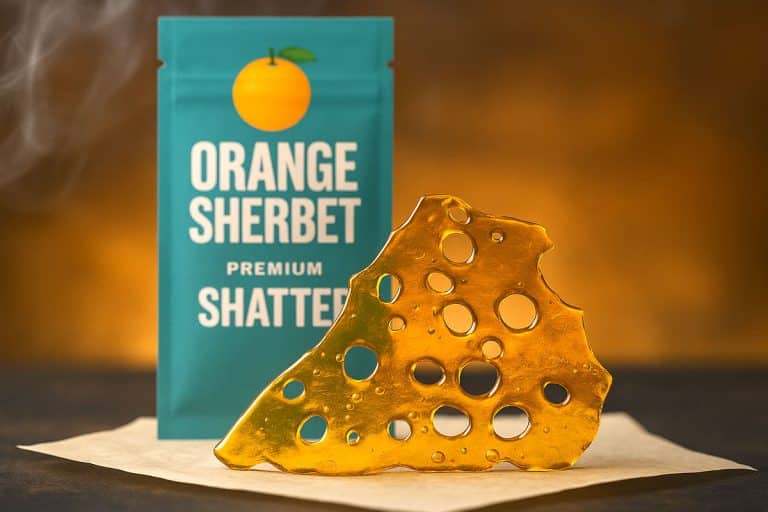
Shatter is a type of cannabis concentrate recognized for its translucent, glass-like structure. It is produced through extraction processes that separate cannabinoids, terpenes, and other compounds from cannabis plant material.
The finished concentrate typically has a golden, amber, or honey-like appearance. Depending on its composition and temperature, shatter may break into brittle pieces or become slightly flexible.
Unlike cannabis flower, which contains plant material alongside cannabinoids, shatter is a concentrated extract that can contain substantial amounts of THC.
Several characteristics distinguish shatter from other concentrates:
-
Appearance: Usually transparent or translucent with golden or amber colouring.
-
Texture: Commonly hard, brittle, and glass-like at room temperature.
-
Potency: Often contains high concentrations of THC, depending on the product.
-
Terpene content: Varies according to extraction methods and starting material.
-
Consistency: Can change when exposed to temperature fluctuations or prolonged storage.
Although shatter is known for its stable-looking structure, its appearance can change as its chemical components gradually reorganize.
Why Does Shatter Turn to Sugar?
The primary explanation behind Why Does Shatter Turn to Sugar? involves changes in the physical structure of cannabinoids and other compounds within the concentrate.
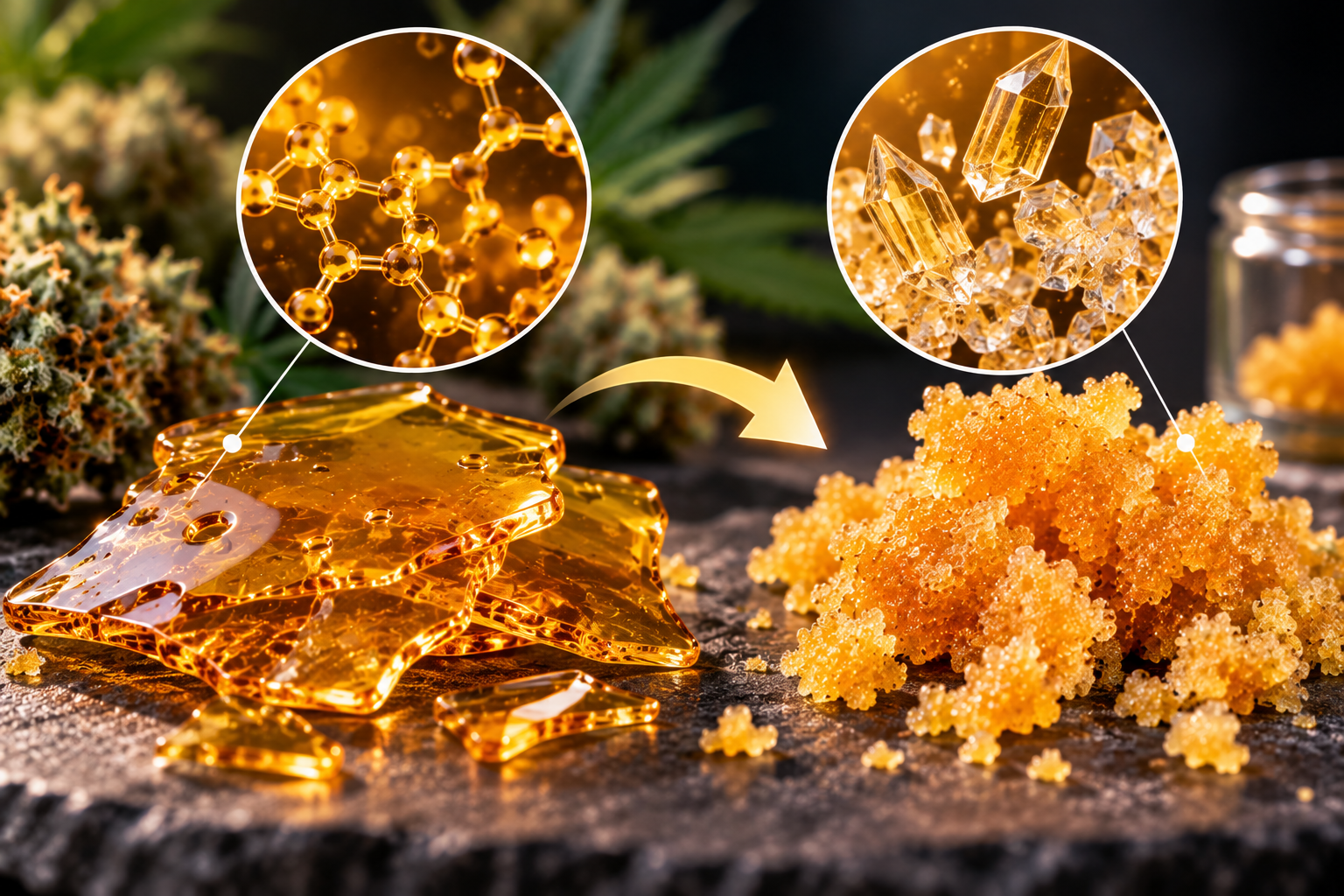
Fresh shatter generally has a relatively uniform, non-crystalline structure. Over time, certain cannabinoids, particularly THCA, may begin forming crystals under suitable conditions.
As crystallization progresses, the concentrate can lose its smooth, glass-like appearance and develop a grainy texture resembling granulated sugar.
This process is commonly known as sugaring or nucleation.
Rather than necessarily indicating contamination or deterioration, sugaring often represents a physical rearrangement of compounds already present in the extract.
However, not every concentrate will sugar at the same rate. The chemical composition, processing history, and storage environment can significantly influence the transformation.
The Science Behind Shatter Sugaring
To understand shatter sugaring, it helps to examine the behaviour of THCA.
THCA, or tetrahydrocannabinolic acid, is a cannabinoid naturally present in cannabis. Under certain conditions, THCA molecules can organize into crystalline structures.
When these crystals begin forming within a concentrate, they may separate from the surrounding terpene-rich liquid components.
This separation can produce a sugary, granular consistency rather than the smooth structure associated with traditional shatter.
Several factors influence crystallization, including cannabinoid concentration, terpene composition, temperature, and the presence of existing crystal-forming sites.
It is important to understand that sugaring is primarily a physical change. It does not automatically mean that cannabinoids have been destroyed or that the concentrate has become unsafe.
Nevertheless, changes in appearance alone cannot establish a product’s safety, potency, or chemical stability.
Common Causes of Shatter Turning to Sugar
1. Temperature Fluctuations
Temperature is one of the most influential factors affecting concentrate consistency.
When shatter experiences repeated changes between warm and cool environments, its physical structure may become less stable.
Warm temperatures can soften the concentrate and increase molecular movement. As conditions change, cannabinoids may have opportunities to reorganize into crystalline structures.
For this reason, maintaining relatively stable storage temperatures can help preserve the original appearance of shatter.
2. Terpene Composition
Terpenes are aromatic compounds that contribute to the distinctive scents and flavours associated with different cannabis strains.
They can also influence concentrate consistency.
Shatter containing different terpene concentrations may behave differently during storage. Some formulations are more resistant to crystallization, while others may develop a sugary texture more readily.
The relationship between terpenes and crystallization is complex, meaning terpene content alone cannot predict exactly when sugaring will occur.
3. Cannabinoid Concentration
The cannabinoid profile of a concentrate can influence its tendency to crystallize.
Extracts containing substantial concentrations of THCA may be more likely to form visible crystals under favourable conditions.
However, high cannabinoid content does not guarantee sugaring, and crystallization should not be treated as proof of superior potency.
4. Storage Conditions
Improper storage can contribute to unwanted physical changes.
Exposure to heat, sunlight, air, and frequent temperature fluctuations may affect the concentrate’s appearance and chemical stability.
Repeatedly opening containers can also introduce environmental changes, including humidity and oxygen exposure.
Although moisture is not required for THCA crystallization, keeping concentrates protected from moisture remains important for general product preservation.

Does Shatter Turning to Sugar Mean It Is Bad?
One of the biggest concerns consumers have is whether sugared shatter has gone bad.
The answer is not necessarily.
Shatter turning to sugar does not automatically mean that the concentrate has spoiled or lost its quality.
In many cases, the transformation simply reflects cannabinoid crystallization and changes in the distribution of terpenes.
However, appearance alone is not enough to determine whether a product remains suitable for consumption.
Consumers should pay attention to unusual odours, visible contamination, unexpected discoloration, or other significant changes that cannot be explained by normal crystallization.
Products with uncertain origins, damaged packaging, or signs of contamination should not be assumed safe simply because sugaring is a common process.
Does Sugared Shatter Lose Potency?
Another frequently asked question is whether crystallization reduces THC potency.
Sugaring itself does not necessarily cause a meaningful reduction in the total cannabinoid content.
The cannabinoids may simply be distributed differently between crystalline and liquid portions of the concentrate.
However, chemical degradation can occur independently of sugaring.
Prolonged exposure to heat, oxygen, and light can contribute to changes in cannabinoid and terpene composition over time.
Therefore, a concentrate may experience physical crystallization without substantial potency loss, but laboratory testing would be required to confirm its actual cannabinoid content.
Potential Benefits of Sugared Shatter
Although some consumers prefer the original glass-like appearance of shatter, others appreciate the texture associated with sugared concentrates.
A Different Texture
Sugared shatter can develop a softer, grainier consistency compared with traditional brittle shatter.
Some consumers find this texture easier to handle, although preferences vary depending on the product and intended application.
A Distinct Concentrate Experience
Crystalline and terpene-rich portions may create a different consistency and aromatic presentation.
The presence of crystals does not necessarily improve flavour, but it can change how the concentrate looks and behaves.
Understanding Natural Concentrate Changes
Perhaps the most practical benefit is educational.
Recognizing normal crystallization helps consumers avoid assuming that every change in appearance indicates a defective product.
However, sugaring should not be considered an automatic improvement in purity, flavour, safety, or potency.

How to Store Shatter Properly
Proper storage is one of the most effective ways to help preserve the appearance and overall quality of cannabis concentrates.
Keep Shatter in a Cool Environment
Avoid exposing concentrates to excessive heat or direct sunlight.
A consistently cool environment can help reduce unwanted changes in texture and limit heat-related chemical degradation.
Use Airtight Containers
Store shatter in a clean, appropriately sized, airtight container made from concentrate-compatible materials.
Glass containers are often useful for longer-term storage because they provide a relatively inert surface and help limit environmental exposure.
Protect Concentrates From Light
Prolonged light exposure can contribute to changes in cannabinoids and terpenes.
Keeping containers in a dark cupboard or other protected storage location helps reduce unnecessary exposure.
Avoid Frequent Temperature Changes
Moving concentrates repeatedly between warm and cold environments may encourage changes in their physical consistency.
Stable storage conditions are generally preferable.
Prevent Contamination
Use clean handling tools and avoid introducing water, dust, or other foreign materials into concentrate containers.
All cannabis products should also be stored securely away from children and pets.
Shatter vs Sugar Wax: What Is the Difference?
Although sugared shatter and sugar wax may appear similar, they are not necessarily identical products.
| Feature | Shatter | Sugar Wax |
|---|---|---|
| Appearance | Translucent, glass-like | Grainy or crystalline |
| Texture | Brittle or flexible | Soft, granular, sometimes moist |
| Cannabinoid content | Varies by formulation | Varies by formulation |
| Terpene profile | Depends on extraction and processing | Depends on extraction and processing |
| Crystallization | May occur over time | Often part of the intended consistency |
Sugar wax is generally manufactured or processed to achieve its characteristic texture, while sugared shatter may begin as a glass-like concentrate and gradually develop crystals during storage.
Neither texture alone guarantees greater potency or better quality.
Can You Prevent Shatter From Turning to Sugar?
It may be possible to reduce the likelihood of sugaring, but preventing it entirely is not always realistic.
Cannabis concentrates contain complex mixtures of compounds, and their physical stability depends on several interacting factors.
Proper storage can help maintain consistency, but some extracts naturally have a greater tendency to crystallize.
Consumers should also avoid attempting to restore shatter by applying excessive heat. Doing so can damage terpene compounds, change the extract’s composition, and create unnecessary safety risks.
Accepting that some texture changes are normal is often more practical than trying to maintain a perfectly glass-like appearance indefinitely.
Final Thoughts: Understanding Shatter Sugaring and Choosing Quality Concentrates
So, Why Does Shatter Turn to Sugar? The most common explanation is cannabinoid crystallization, particularly involving THCA, combined with influences from temperature, terpene composition, and storage conditions.
Although the transformation may initially appear concerning, sugaring does not automatically indicate poor quality, contamination, or reduced potency.
By understanding how concentrates behave and following appropriate storage practices, consumers can make better-informed decisions about cannabis extracts.
For adults interested in exploring cannabis concentrates, Supreme Dispensary is an online dispensary option worth considering for its concentrate selection. Before purchasing, verify that the retailer is authorized to sell cannabis in your jurisdiction and review available product information, including cannabinoid content, ingredients, and testing details.
Ultimately, choosing properly labelled, regulated cannabis products and storing them carefully matters far more than whether a piece of shatter remains perfectly transparent or develops a sugary texture.