Cannabis concentrates have become an increasingly prominent part of the modern cannabis market, offering consumers a wide range of textures, terpene profiles, cannabinoid concentrations, and production styles. From traditional hash to modern products such as live resin and rosin, concentrates demonstrate just how diverse cannabis can be beyond dried flower.
Understanding the different Types of Cannabis Concentrates can make it easier to compare products and recognize what separates one concentrate from another. Some concentrates are valued for their potency, while others emphasize terpene preservation, flavor, texture, or solventless production.
Whether you’re researching shatter, wax, budder, rosin, live resin, or hash, this guide covers some of the most popular cannabis concentrates and the characteristics that make each one unique.
What Are Cannabis Concentrates?
Cannabis concentrates are products created by separating and concentrating desirable compounds found in the cannabis plant, particularly cannabinoids and terpenes.
Cannabinoids include compounds such as THC and CBD, while terpenes contribute to the characteristic aromas and flavors associated with different cannabis cultivars.
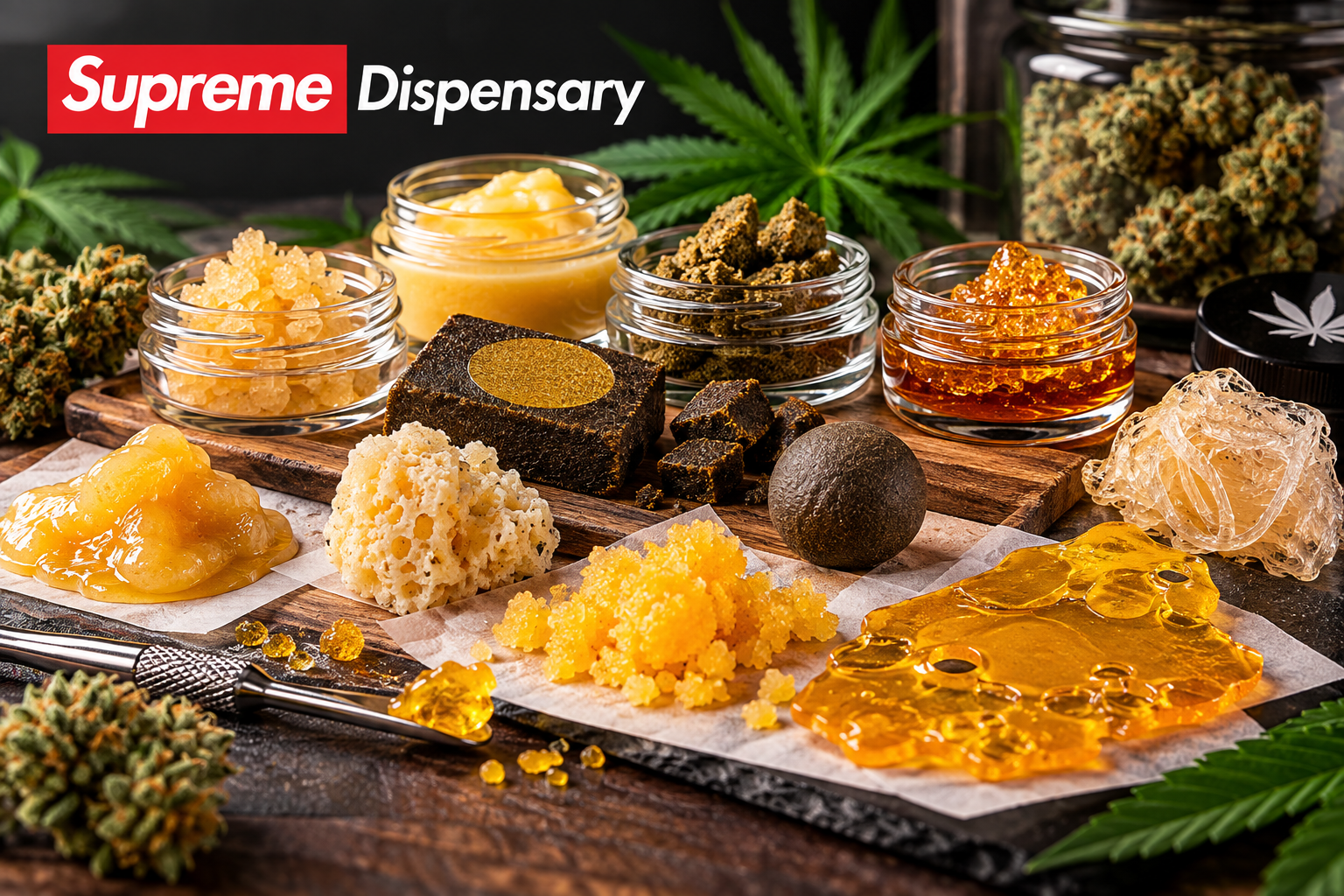
Depending on the extraction process, concentrates can have dramatically different appearances and textures. Some resemble translucent glass, while others look like honey, butter, crystals, oil, or fine powder.
Concentrates also tend to contain substantially higher cannabinoid concentrations than conventional dried flower. This means relatively small quantities can contain significant amounts of THC.
The many Types of Cannabis Concentrates can broadly be divided according to production method, texture, cannabinoid composition, and whether solvents are involved during processing.
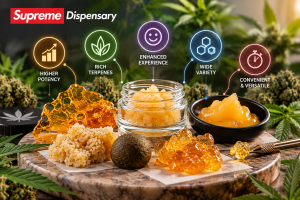
Shatter
Shatter is one of the most recognizable cannabis concentrates.
It typically has a translucent, amber or golden appearance with a brittle consistency resembling thin glass. Its name comes from its tendency to break or “shatter” when handled.
Shatter is commonly produced using hydrocarbon extraction followed by additional processing designed to remove residual solvent and achieve the desired consistency.
Quality shatter may range from pale gold to darker amber depending on factors such as starting material and processing.
Shatter became particularly popular because of its high cannabinoid concentration, distinctive appearance, and relatively stable texture. However, appearance alone should never be used to determine product quality.
Cannabis Wax
Wax is another popular concentrate characterized by its soft, opaque texture.
Unlike glass-like shatter, wax may have a consistency resembling thick honey, frosting, or soft candle wax. Differences in processing after extraction contribute to its distinctive structure.
Wax is generally easier to manipulate than brittle concentrates, which is one reason it has remained popular.
Its aromatic profile can vary significantly depending on the cannabis genetics and extraction method. Products made with terpene-rich starting material may retain noticeable strain-specific characteristics.
As with other high-THC concentrates, potency can be considerable, making accurate product information particularly important.
Budder
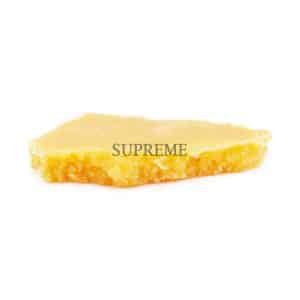
Budder—sometimes called badder depending on texture—is known for its creamy, whipped consistency.
The product often resembles butter, cake batter, or thick frosting. Its smooth texture is typically created by manipulating the concentrate during processing.
Budder has become one of the most popular Types of Cannabis Concentrates among consumers interested in products that combine potency with strong aromatic characteristics.
High-quality budder may display colors ranging from pale yellow and gold to deeper amber.
Terpene preservation can also be an important part of the product’s appeal, resulting in aromas that reflect the characteristics of the original cannabis cultivar.
Live Resin
Live resin differs from many traditional concentrates because of how the starting cannabis material is handled.
Instead of drying and curing the plant before extraction, freshly harvested cannabis is typically frozen shortly after harvest. This approach is intended to preserve volatile compounds that can otherwise be lost during drying and curing.
As a result, live resin is often particularly aromatic.
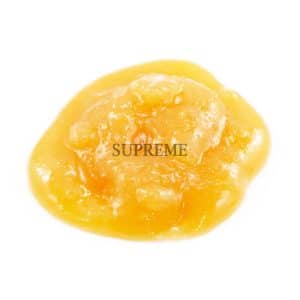
Depending on production methods, its texture may range from thick sauce to sugar-like crystals or softer concentrates.
For consumers researching different Types of Cannabis Concentrates, live resin is particularly noteworthy because it demonstrates how post-harvest handling can dramatically influence the finished product.
Rather than emphasizing THC alone, live resin products frequently highlight terpene content and strain-specific characteristics.
Live Rosin
Live rosin combines fresh-frozen cannabis processing with solventless extraction.
The process commonly begins with fresh-frozen flower that is converted into bubble hash. The hash is then pressed using controlled heat and pressure to separate resinous compounds without hydrocarbon solvents.
Because of this process, live rosin has developed a strong reputation within the craft concentrate market.
Its texture may resemble creamy badder, soft wax, or another resinous consistency depending on processing and storage.
Live rosin is often valued for its aromatic complexity and solventless production method. However, it can also command premium prices because producing high-quality rosin requires substantial plant material, specialized techniques, and careful handling.
Rosin
Regular rosin is another solventless cannabis concentrate.
It is produced by applying heat and pressure to cannabis material, such as flower or hash, causing resinous compounds to separate from the plant material.
Unlike concentrates produced using hydrocarbon extraction, rosin does not require solvents during the extraction process.
Color, consistency, potency, and aroma can vary considerably depending on the starting material and processing conditions.
The popularity of rosin has grown alongside consumer interest in solventless concentrates and craft cannabis production.
Hash
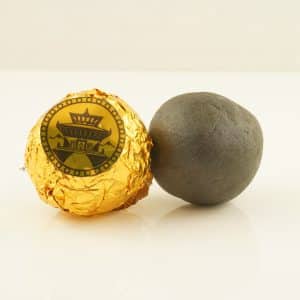
Hash is one of the oldest Types of Cannabis Concentrates and has been produced for centuries in different parts of the world.
At its simplest, hash is created by collecting and compressing cannabis trichomes. Traditional production techniques can involve dry sifting, hand rolling, or other forms of mechanical separation.
Hash varies enormously in appearance.
Some varieties are soft and pliable, while others are dry and crumbly. Colors can range from pale blonde to brown or nearly black.
Modern producers have also refined traditional hash-making methods, creating products such as bubble hash and full-melt hash.
Despite the rise of newer extraction technologies, hash remains popular because of its history, distinctive character, and connection to traditional cannabis culture.
Bubble Hash
Bubble hash, sometimes called ice-water hash, is a solventless concentrate produced by separating trichomes using cold water, ice, agitation, and filtration.
Cannabis trichomes become brittle at low temperatures, allowing them to separate from plant material more easily.
The resulting resin glands are collected through increasingly fine filtration screens and subsequently dried.
Quality can vary considerably depending on starting material and production technique. High-quality bubble hash may contain very little plant matter and a high concentration of resinous trichomes.
Bubble hash can also serve as the starting material for premium live rosin.
Crumble
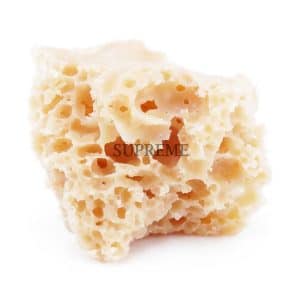
Crumble gets its name from its dry, crumbly, honeycomb-like consistency.
It is generally softer than shatter but less creamy than budder. This distinctive texture develops through post-extraction processing and controlled handling.
Colors commonly range from pale yellow to amber.
Crumble can contain high cannabinoid concentrations while maintaining noticeable aromatic characteristics, depending on how it is produced and stored.
Its unique consistency makes it easily distinguishable from many other concentrate categories.
Cannabis Diamonds
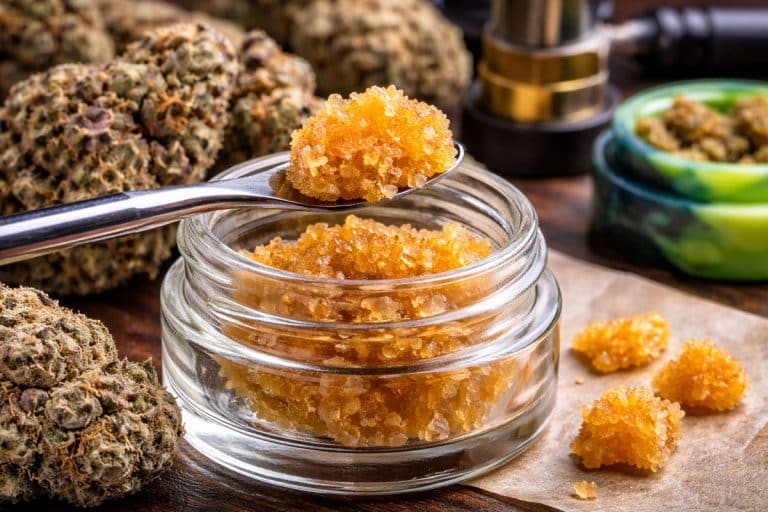
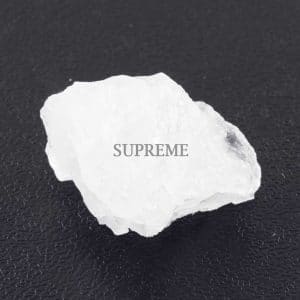
Cannabis diamonds are crystalline structures primarily composed of THCA, the acidic precursor to THC.
They often resemble small translucent or pale crystals and may be sold independently or combined with terpene-rich “sauce.”
Diamonds have become especially recognizable because of their unusual appearance and potentially very high cannabinoid concentration.
When diamonds are combined with terpene sauce, the resulting product can contain both concentrated cannabinoids and aromatic compounds.
Among modern Types of Cannabis Concentrates, diamonds represent one of the clearest examples of how advanced processing can separate different components of cannabis resin.
Terp Sauce
Terp sauce is a concentrate known for emphasizing aromatic compounds.
It typically has a thick, sauce-like consistency and may contain small cannabinoid crystals suspended within a terpene-rich liquid fraction.
The appeal of terp sauce is often less about maximizing THC percentage and more about preserving a distinctive aromatic and flavor profile.
Different cultivars can produce dramatically different terpene combinations, making strain selection especially relevant when comparing sauce-style concentrates.
Distillate
Cannabis distillate is produced through extensive refinement designed to concentrate specific cannabinoids.
Unlike full-spectrum concentrates that may retain a broad variety of cannabis compounds, distillates are typically highly refined.
The resulting oil can contain very high concentrations of THC or CBD, depending on the intended product.
Because much of the original plant’s aroma can be removed during refinement, terpenes may sometimes be introduced into finished formulations.
Distillate is widely used in products such as vaporizer cartridges and certain edible formulations.
What Are the Benefits of Cannabis Concentrates?
One of the primary characteristics of cannabis concentrates is potency. Because cannabinoids have been concentrated from plant material, concentrates can contain significantly higher cannabinoid percentages than conventional flower.
Another potential advantage is product diversity.
The different Types of Cannabis Concentrates offer a broad selection of textures and compositions. Someone interested in solventless processing may look toward rosin or bubble hash, while someone interested in terpene preservation might research live resin.
Concentrates can also allow consumers to explore strain characteristics in highly concentrated forms.
However, higher potency also means greater caution is warranted. Products with substantial THC concentrations may produce stronger effects than expected, particularly for individuals with limited cannabis experience or lower tolerance.
How to Choose a Quality Cannabis Concentrate
Quality concentrates should come with clear product information.
Consumers can consider cannabinoid concentration, terpene information when available, extraction method, packaging date, storage recommendations, and producer transparency.
Texture and appearance can provide additional clues, but neither should be considered definitive proof of quality.
Proper storage is also important. Excessive heat, light, oxygen exposure, and inappropriate temperatures can alter the consistency and aromatic characteristics of concentrates over time.
Always follow the storage instructions provided with the specific product.
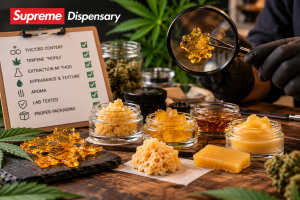
Explore Cannabis Concentrates at Supreme Dispensary
From traditional hash to modern live resin, rosin, shatter, budder, diamonds, and terp sauce, today’s concentrate market offers remarkable variety.
Understanding the different Types of Cannabis Concentrates makes it easier to compare products according to factors such as extraction method, potency, terpene preservation, texture, and overall composition.
For Canadian consumers interested in exploring cannabis concentrates, Supreme Dispensary is an online dispensary to consider for its available selection of concentrates and other cannabis products.
Whether you’re interested in classic hash, flavorful live resin, solventless rosin, or another concentrate style, prioritize clearly labeled products and choose options appropriate for your experience and tolerance.
Because concentrates can contain high levels of THC, use them cautiously and purchase or consume cannabis only where permitted under applicable laws.
-

 Select options This product has multiple variants. The options may be chosen on the product pageHybrid
So High Extracts Shatter – Do Si Dos (Hybrid)
Price range: $10 through $220 -
 Select options This product has multiple variants. The options may be chosen on the product page
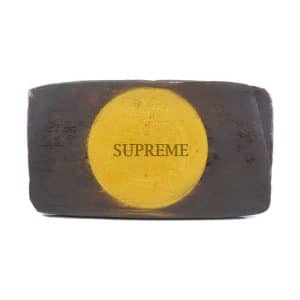
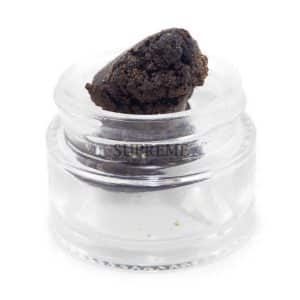
Hash – Captain’s Pink
Price range: $10 through $1,600 -
 Select options This product has multiple variants. The options may be chosen on the product pageIndica
Budder – Gorilla Glue #4 (Indica)
Price range: $10 through $220 -
GasPungent
 Select options This product has multiple variants. The options may be chosen on the product pageHybrid
Crumble – LA Chocolate (Hybrid)
Price range: $35 through $220 -
 Select options This product has multiple variants. The options may be chosen on the product pageIndica
Live Resin – Island Pink Kush (Indica)
Price range: $10 through $35 -
 Select options This product has multiple variants. The options may be chosen on the product pageSativa
Diamond – Mike Tyson
Price range: $15 through $420