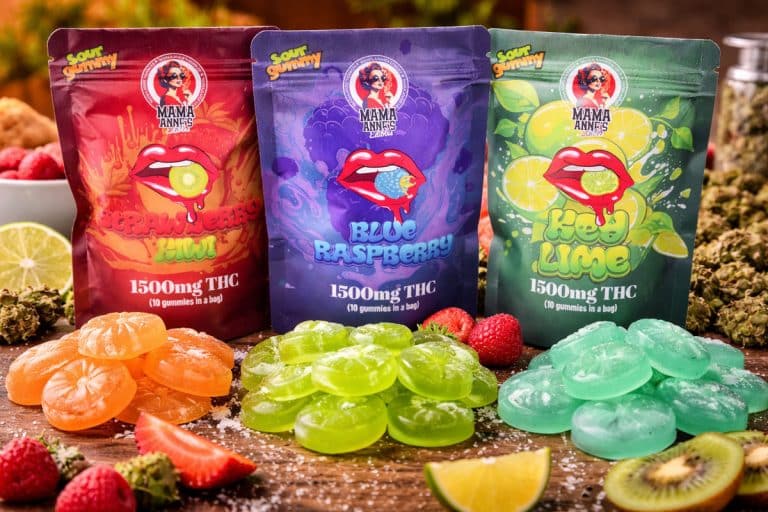
Cannabis edibles have become a popular alternative to smoking and vaping, offering a smoke-free way to consume THC in forms such as gummies, chocolates, baked goods, and infused beverages. However, one question continues to attract attention among cannabis consumers: Do edibles hit faster and harder when taken on an empty stomach?
The relationship between Edibles on Empty Stomach and the effects of THC is more complicated than many people realize. While some consumers report experiencing effects sooner when they haven’t eaten, others notice stronger or longer-lasting effects after consuming food, particularly meals containing fat.
Understanding how digestion, metabolism, food intake, and THC absorption interact can help consumers make more informed decisions. This guide explores what happens when cannabis edibles are consumed without food, the potential advantages and disadvantages, and important safety considerations.
What Happens When You Take Edibles on an Empty Stomach?
When cannabis edibles are swallowed, THC travels through the digestive system before being absorbed and processed by the body.
Unlike smoking or vaping, which deliver cannabinoids through the lungs, conventional edibles rely largely on gastrointestinal absorption.
After absorption, THC undergoes metabolism in the liver, where some of it is converted into 11-hydroxy-THC, an active metabolite that contributes to the effects of oral cannabis.
This process helps explain why edible cannabis can produce a different experience from inhaled cannabis.
When someone consumes Edibles on Empty Stomach, the absence of a substantial meal may influence how quickly the stomach empties and how cannabinoids move through the digestive tract.
However, faster stomach emptying does not automatically guarantee faster THC absorption or stronger intoxication. The edible’s formulation, fat content, individual digestive function, and other factors also influence the experience.

Do Edibles Hit Faster on an Empty Stomach?
One common belief is that cannabis edibles always work faster when consumed without food.
There is some physiological reasoning behind this idea. Food can delay gastric emptying, meaning substances may take longer to move from the stomach into the small intestine, where much absorption occurs.
However, THC is highly fat-soluble, and food can influence its absorption in ways that make the overall relationship less predictable.
For example, a meal may delay the beginning of noticeable effects while increasing the total amount of THC absorbed.
Research on oral THC formulations has shown that food, especially high-fat meals, can substantially change cannabinoid exposure. These findings don’t translate perfectly to every gummy, chocolate, or baked edible, but they demonstrate why simple rules about an empty stomach can be misleading.
Ultimately, Edibles on Empty Stomach may begin working sooner for some individuals, but this is not guaranteed.
Do Edibles Hit Harder Without Food?
Another frequent question is whether consuming edibles without eating produces a more intense high.
The answer depends on several variables.
Some consumers report feeling effects more abruptly when their stomach is empty. This may create the impression that THC is hitting harder, especially when the onset feels unexpected.
However, faster perceived onset is different from greater overall THC absorption.
Because THC dissolves readily in fats, eating can sometimes increase the amount absorbed into the bloodstream. Consequently, edibles consumed with food may produce substantial effects even when the onset is slower.
The Edibles on Empty Stomach experience is therefore not necessarily stronger than consuming the same product after eating.
Individual tolerance, THC concentration, product formulation, and metabolism can matter more than whether someone has recently eaten.
Edibles on an Empty Stomach vs Full Stomach
Comparing cannabis edibles with and without food highlights several important differences.
| Factor | Empty stomach | After eating |
|---|---|---|
| Onset | May feel quicker for some people | May be delayed by digestion |
| THC absorption | Can vary considerably | Fat-containing meals may increase absorption |
| Intensity | Not reliably stronger | Can sometimes produce greater overall exposure |
| Digestive comfort | Nausea or discomfort may occur | Food may improve comfort for some |
| Predictability | Highly variable | Still variable and dependent on the meal |
Neither situation guarantees a particular result.
Consumers should also remember that delayed onset does not mean an edible has failed to work. Taking additional THC before the original dose has fully developed can lead to unexpectedly intense intoxication.
How Long Do Edibles Take to Kick In?
One of the biggest differences between cannabis edibles and inhaled cannabis is the time required to experience noticeable effects.
Conventional swallowed edibles commonly begin producing effects within approximately 30 minutes to two hours, although some take longer.
Peak effects can occur several hours after consumption.
The noticeable effects may last six to eight hours or longer, while some impairment can persist beyond the main subjective experience.
These broad ranges vary according to product type, dose, individual metabolism, and food intake.
When researching Edibles on Empty Stomach, consumers should avoid assuming that a lack of immediate effects means they need more THC.
Waiting for the full effects to develop is particularly important because excessive consumption is a common cause of unpleasant edible experiences.
Why THC Edibles Feel Different From Smoking Cannabis
The way THC enters the body plays a major role in how cannabis feels.
When cannabis is smoked or vaporized, THC enters the bloodstream through the lungs, producing relatively rapid effects.
Swallowed edibles take a different route.
THC is absorbed through the gastrointestinal tract and undergoes significant metabolism before reaching systemic circulation.
The liver converts some THC into 11-hydroxy-THC, which is psychoactive and can contribute to the intensity and duration of the edible experience.
This helps explain why edibles can feel more prolonged or different from inhaled cannabis, even when the same cannabinoid is involved.
It also explains why experiences with smoking don’t necessarily predict how someone will respond to an edible.
Potential Benefits of Cannabis Edibles
Although taking Edibles on Empty Stomach doesn’t offer any established health advantage, cannabis edibles themselves have several practical characteristics that some adults prefer.
A Smoke-Free Consumption Method
One of the main benefits is avoiding smoke inhalation.
Unlike smoking cannabis flower, edibles don’t involve burning plant material or inhaling combustion products.
This eliminates smoke exposure associated with that particular method of consumption, although it doesn’t make edibles risk-free.
Longer-Lasting Effects
Edibles generally produce longer-lasting effects than inhaled cannabis.
Some adults appreciate this extended duration, particularly when they don’t want to consume cannabis repeatedly.
However, longer effects can also become a disadvantage when someone experiences anxiety, dizziness, or excessive intoxication.
Convenient Product Formats
Cannabis edibles come in numerous forms, including gummies, chocolates, soft chews, beverages, and capsules.
These options offer alternatives for adults who dislike smoking or vaping.
Clearly labeled products can also provide information about THC and CBD content, making it easier to understand the intended cannabinoid quantity.
Discreet Storage and Packaging
Edibles often come in compact, sealed packaging.
However, their resemblance to ordinary snacks creates a serious risk of accidental consumption, particularly among children and pets.
All cannabis products should be stored securely, preferably locked away and kept in their original child-resistant packaging.
Can Taking Edibles Without Food Cause Nausea?
Digestive discomfort is another consideration.
Cannabis edibles can sometimes cause nausea, stomach discomfort, or dizziness. Individual responses vary, and consuming THC without food may feel uncomfortable for certain people.
Some individuals also experience anxiety or lightheadedness that they interpret as stomach-related discomfort.
Eating beforehand does not guarantee that these symptoms will disappear.
People who repeatedly experience nausea, vomiting, or other unpleasant symptoms after cannabis consumption should reconsider use and seek medical advice when appropriate.
Persistent or recurrent severe vomiting associated with long-term cannabis use may require evaluation for cannabinoid hyperemesis syndrome.
How Food Influences THC Absorption
Food affects cannabis edibles through several mechanisms.
THC is a lipophilic compound, meaning it dissolves more readily in fats than in water.
Meals containing fat can change how THC is absorbed, potentially increasing overall cannabinoid exposure in some circumstances.
Food also affects stomach emptying, digestive secretions, and intestinal activity.
This means a meal may simultaneously delay the beginning of effects while influencing how much THC ultimately enters the bloodstream.
For people researching Edibles on Empty Stomach, this distinction is essential: faster onset, greater absorption, and stronger perceived effects are three different outcomes.
The presence or absence of food alone cannot reliably predict all three.
Important Risks of Taking Edibles on an Empty Stomach
Cannabis edibles can produce significant impairment regardless of meal timing.
Potential unwanted effects include anxiety, panic, paranoia, confusion, dizziness, rapid heart rate, nausea, and impaired judgment.
Higher THC exposure can increase these risks, especially for people with little cannabis experience.
The delayed effects of edibles create an additional concern. Someone may believe a product isn’t working and consume more before the original THC has reached its peak.
This can result in much stronger effects than intended.
Cannabis edibles should never be combined with driving, operating machinery, or other activities requiring unimpaired coordination and judgment.
Combining THC with alcohol or other intoxicating substances can further increase impairment.

Tips for a More Predictable Edible Experience
Understanding Edibles on Empty Stomach is useful, but several other considerations are equally important.
-
Choose clearly labeled products: Look for reliable THC and CBD information and appropriate quality testing.
-
Avoid rapid redosing: Edibles can take several hours to reach their strongest effects.
-
Consider individual tolerance: Previous experiences with smoking don’t necessarily predict edible tolerance.
-
Avoid mixing intoxicants: Alcohol and other substances can increase impairment.
-
Prioritize a safe environment: Unwanted effects can last several hours, making it important to avoid hazardous activities.
-
Store products securely: Keep edibles away from children, pets, and anyone who might mistake them for ordinary food.
For adults who choose to consume cannabis, a cautious approach is more important than trying to achieve the fastest or strongest possible effects.
Are Edibles Better Before or After Eating?
There is no universally correct answer.
Some people find that consuming cannabis after a normal meal produces a more comfortable experience. Others notice differences in onset depending on when they last ate.
Scientific evidence does not support a simple rule that an empty stomach is always preferable.
In fact, because food can alter THC absorption and exposure, deliberately changing meal timing to intensify intoxication may produce unpredictable results.
The most useful approach is to understand that Edibles on Empty Stomach can behave differently across individuals and formulations.
Consumers should focus on product quality, clearly labeled cannabinoid content, personal health considerations, and avoiding excessive consumption.
Final Thoughts: Edibles on an Empty Stomach
So, do edibles hit faster and harder without food?
The answer is that Edibles on an Empty Stomach may produce a quicker onset for some consumers, but they are not consistently stronger. Food can delay gastric emptying while potentially increasing THC absorption, particularly when fat-containing meals are involved.
Cannabis edibles offer several practical benefits, including smoke-free consumption, longer-lasting effects, and convenient product formats. However, they also carry risks related to delayed onset, prolonged impairment, and unpredictable individual responses.
Understanding these factors helps consumers make informed decisions rather than relying on myths about how quickly or intensely edibles should work.
For legal-age adults interested in exploring cannabis edibles, Supreme Dispensary is an online dispensary option worth considering, subject to its current licensing and the laws governing cannabis sales in the purchaser’s location. When comparing products, prioritize accurate THC labeling, transparent ingredients, quality testing, and responsible consumption over promises of stronger or faster effects.