Cannabis is an incredibly diverse plant, offering a wide variety of strains with unique aromas, flavours, appearances, and effects. However, even when two cannabis plants come from the same strain, they may look, smell, and perform differently. This variation is largely explained by Cannabis Phenotype vs Genotype, two essential concepts in cannabis genetics.
Understanding the difference between genotype and phenotype can help cannabis enthusiasts make more informed decisions when exploring strains. Whether you prefer relaxing indica varieties, uplifting sativa strains, or balanced hybrids, genetics plays an important role in shaping the characteristics of your cannabis.
In this guide, we’ll explore Cannabis Phenotype vs Genotype, how genetics and environmental factors influence cannabis development, and why these differences matter when choosing quality weed.
What Is Cannabis Genotype?
A cannabis genotype refers to the genetic makeup of a cannabis plant. It contains the inherited genetic information that influences how the plant develops, grows, and produces various characteristics.
Every cannabis plant inherits genetic material from its parent plants. These genes help determine its potential traits, including:
-
Plant height and overall structure
-
Leaf shape and growth patterns
-
Cannabinoid production potential
-
Terpene profiles and aromatic characteristics
-
Flowering behaviour and maturation
-
Resistance or susceptibility to environmental stress
For example, a cannabis strain developed by crossing two different parent varieties may inherit genetic traits from both.
However, possessing certain genes does not guarantee that every characteristic will appear identically in every plant.
This distinction is essential when understanding Cannabis Phenotype vs Genotype because genetics establishes a plant’s potential, while other factors influence how that potential is expressed.
What Is Cannabis Phenotype?
A cannabis phenotype refers to the observable characteristics of a cannabis plant. These characteristics develop through interactions between the plant’s genotype and its growing environment.
While genotype represents genetic potential, phenotype describes how that potential is expressed.
Cannabis phenotypes can vary in several noticeable ways, including:
-
Bud appearance: Differences in flower density, colour, size, and trichome coverage.
-
Aroma: Variations in citrus, earthy, fruity, floral, or diesel-like scents.
-
Flavour: Different combinations and concentrations of aromatic compounds can influence taste.
-
Cannabinoid content: THC and CBD concentrations may differ between individual plants.
-
Growth characteristics: Plants may develop different heights, branching patterns, or flowering times.
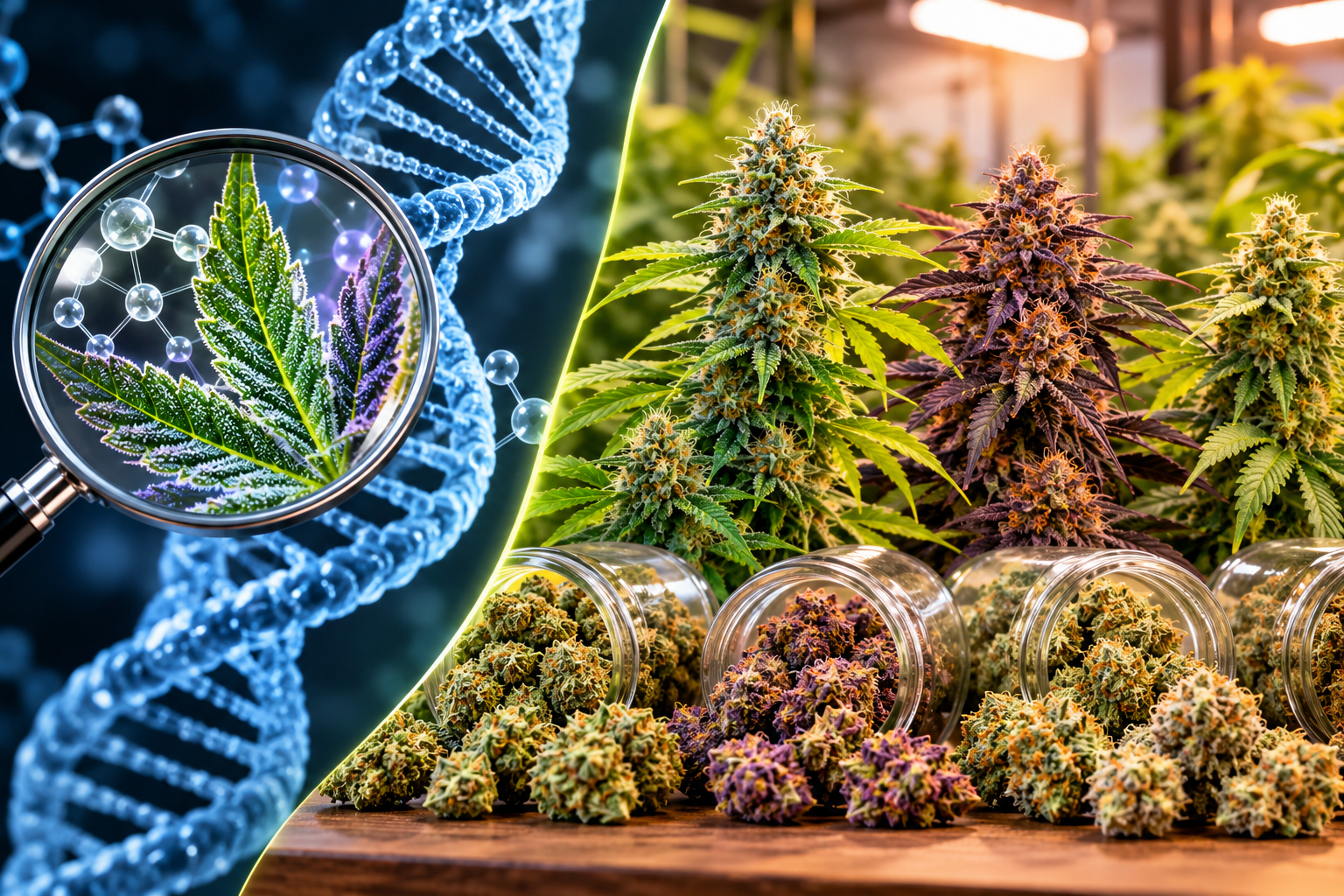
For instance, two plants grown from seeds of the same strain may produce noticeably different flowers. One might develop dense purple buds with sweet aromas, while another produces lighter green flowers with stronger earthy notes.
These differences demonstrate how phenotype contributes to the diversity found in cannabis products.

Cannabis Phenotype vs Genotype: Understanding the Key Differences
Although genotype and phenotype are closely connected, they describe different aspects of cannabis biology.
| Feature | Genotype | Phenotype |
|---|---|---|
| Definition | Genetic makeup of a plant | Observable plant characteristics |
| Main influence | Inherited DNA | Genetics and environment |
| Appearance | Genetic potential for traits | Actual colour, size, and structure |
| Cannabinoids | Potential production characteristics | Measured cannabinoid profile |
| Terpenes | Genetic capacity for terpene production | Expressed aroma and terpene levels |
| Environmental influence | DNA sequence generally remains stable | Can change with growing conditions |
The simplest way to understand Cannabis Phenotype vs Genotype is to think of genotype as the plant’s genetic blueprint and phenotype as the characteristics that develop from that blueprint.
Both are important for understanding why cannabis strains can exhibit such different qualities.
How Genetics Influence Cannabis Strains
Cannabis genetics plays a major role in determining the characteristics associated with different strains.
Through selective breeding, cultivators can develop plants with combinations of desirable traits, such as distinctive aromas, cannabinoid profiles, or flower structures.
Indica, Sativa, and Hybrid Genetics
Cannabis strains are commonly marketed as indica, sativa, or hybrid.
Indica varieties are traditionally associated with shorter, bushier plants, while sativa varieties are often associated with taller growth patterns and narrower leaves.
Hybrid strains combine genetic backgrounds from different cannabis lineages.
However, these labels do not reliably predict how a cannabis product will affect an individual. Cannabinoid content, terpene composition, dose, and personal sensitivity are more informative than indica or sativa classification alone.
Understanding Cannabis Phenotype vs Genotype helps explain why plants carrying similar strain labels can produce different chemical profiles.
How Growing Conditions Affect Cannabis Phenotypes
Environmental conditions influence how cannabis genes are expressed.
Even plants with nearly identical genetic backgrounds may develop different characteristics when grown under different conditions.
Light Exposure
Light intensity, spectrum, and duration can influence cannabis growth, flower development, and the production of certain plant compounds.
Differences in lighting environments may contribute to variations in plant structure and chemical composition.
Temperature and Humidity
Temperature and humidity affect plant metabolism and overall development.
Environmental stress may influence pigment expression, growth patterns, and the concentrations of certain compounds.
For example, some genetically predisposed cannabis plants develop purple pigmentation under particular environmental conditions.
However, purple colouration alone does not indicate higher THC content or better quality.
Nutrients and Growing Medium
Nutrient availability and growing conditions can affect plant health and development.
Differences in nutrient balance may influence flower production, growth rates, and the expression of specific characteristics.
This demonstrates why cannabis phenotype is not determined by genetics alone.
Why Cannabis Phenotypes Can Have Different THC Levels
One of the most interesting aspects of Cannabis Phenotype vs Genotype is the variation in cannabinoid concentrations.
THC, or tetrahydrocannabinol, is the primary intoxicating compound in cannabis.
Although genetics strongly influences a plant’s cannabinoid production potential, the actual THC concentration can vary because of environmental conditions, plant maturity, cultivation practices, and post-harvest handling.
For example, two plants belonging to the same strain may produce flowers with different THC percentages.
One sample might contain 18% THC, while another contains 23%, although these numbers are only illustrative.
Higher THC concentrations do not automatically mean better cannabis. They can also increase the likelihood of unwanted effects, including anxiety, dizziness, and impaired coordination.
Consumers should prioritize verified cannabinoid information rather than relying exclusively on strain names or appearance.
How Phenotypes Influence Cannabis Flavour and Aroma
Terpenes are aromatic compounds found in cannabis and many other plants.
They contribute to the distinctive scents associated with different cannabis varieties.
Common cannabis terpenes include:
-
Myrcene: Often associated with earthy, herbal, and musky aromas.
-
Limonene: Commonly produces citrus-like fragrances.
-
Pinene: Contributes fresh pine and woody notes.
-
Linalool: Associated with floral and lavender-like scents.
-
Caryophyllene: Known for spicy, peppery, and woody characteristics.
Different phenotypes may express these compounds in varying concentrations.
As a result, cannabis flowers with similar genetic backgrounds can have noticeably different aromatic profiles.
Terpenes are sometimes promoted as predictors of specific effects, but research has not established that individual terpene profiles reliably determine a person’s cannabis experience.
Nevertheless, terpene information can be useful when comparing aromas and flavour preferences.
What Is Phenotype Hunting in Cannabis?
Phenotype hunting, commonly called pheno hunting, is the process of evaluating plants from a shared genetic lineage to identify individuals with desirable characteristics.
Cannabis breeders may examine multiple plants from the same seed population and compare their observable traits.
Characteristics commonly evaluated include flower structure, aromatic complexity, cannabinoid composition, and consistency.
Once a desirable phenotype is identified, cultivators may preserve its genetic identity through cloning.
Unlike seed-grown siblings, clones are generally genetically identical to their parent plant, although their expressed characteristics can still vary under different environmental conditions.
Phenotype selection helps explain how breeders develop recognizable cannabis cultivars and work toward greater consistency.
Benefits of Understanding Cannabis Phenotype vs Genotype
Learning about Cannabis Phenotype vs Genotype offers several advantages for cannabis enthusiasts and consumers.
1. Better Understanding of Cannabis Quality
Recognizing genetic and environmental influences helps consumers understand why products with the same strain name may differ in appearance, aroma, and cannabinoid content.
2. More Informed Strain Comparisons
Instead of choosing cannabis solely by strain name, consumers can compare verified THC and CBD levels, terpene profiles, and product descriptions.
3. Greater Appreciation for Cannabis Diversity
Cannabis genetics explains why the plant produces such a remarkable range of colours, fragrances, structures, and chemical profiles.
4. More Realistic Expectations
Understanding phenotype variation helps consumers recognize that a strain may not look or smell identical across different batches or producers.
5. Improved Product Selection
Knowledge of genetics encourages consumers to evaluate product freshness, laboratory testing, transparent labelling, and overall quality rather than relying on marketing claims alone.

How to Choose Quality Cannabis Based on Genetics
When exploring cannabis products, genetics can provide useful background information, but it should not be the only consideration.
Look for products that provide clear details about cannabinoid concentrations, strain lineage, and available terpene information.
Freshness and proper storage also matter because exposure to heat, light, oxygen, and moisture can affect cannabis quality over time.
Consumers should consider the following:
-
Choose products with reliable laboratory testing and accurate cannabinoid labels.
-
Examine flower appearance and packaging condition.
-
Look for clear information about strain genetics and product origin.
-
Avoid assuming that higher THC percentages indicate superior quality.
-
Consider personal tolerance and the possibility of unwanted effects.
For consumers in Canada, purchasing from provincially authorized retailers also provides important regulatory protections concerning testing, labelling, and product standards.
Ultimately, quality cannabis is determined by more than genetics. Cultivation, harvesting, processing, testing, and storage all contribute to the final product.
Does Cannabis Genotype Determine Its Effects?
Genotype influences the plant’s potential cannabinoid and terpene composition, but it does not determine exactly how someone will respond to cannabis.
Individual experiences depend on several factors, including THC dose, CBD content, consumption method, tolerance, and personal sensitivity.
For example, two people consuming the same cannabis product may report very different experiences.
Cannabis can cause relaxation or altered sensory perception, but it can also produce anxiety, increased heart rate, impaired memory, and reduced reaction time.
Understanding Cannabis Phenotype vs Genotype provides useful insight into plant characteristics without creating unrealistic expectations about effects.
Final Thoughts: Why Cannabis Phenotype vs Genotype Matters
Understanding Cannabis Phenotype vs Genotype is essential for appreciating the complexity of cannabis genetics.
Genotype establishes the genetic foundation of a cannabis plant, while phenotype represents the observable characteristics that emerge through interactions between genetics and environmental conditions.
These differences help explain why cannabis strains can vary in appearance, aroma, flavour, cannabinoid content, and overall quality.
For cannabis enthusiasts, this knowledge makes it easier to compare products, recognize natural variations, and appreciate the diversity of modern cannabis varieties.
If you’re interested in exploring different cannabis genetics, Supreme Dispensary is an online dispensary worth considering for its selection of cannabis strains and products. Review available product information, cannabinoid details, and local purchasing requirements before ordering.
By combining an understanding of cannabis genetics with careful product selection, consumers can make more informed choices and better appreciate the unique characteristics of each cannabis variety.