Cannabis can produce a wide range of effects, from relaxation and euphoria to changes in appetite and sensory perception. But alongside these commonly discussed experiences comes one particularly familiar side effect: Weed dry mouth. Often called “cottonmouth,” this uncomfortable sensation can leave your mouth and throat feeling unusually dry after consuming cannabis.
For many cannabis consumers, dry mouth is temporary and manageable. Still, understanding why it happens is useful, especially for people who consume cannabis regularly. Saliva plays an important role in keeping the mouth comfortable, helping with swallowing, and protecting oral health. Persistent dryness shouldn’t simply be ignored.
So, why does cannabis cause cottonmouth, and what can you do about it? This guide examines the science behind Weed dry mouth, factors that may make it more noticeable, and practical ways to stay comfortable while enjoying cannabis responsibly.
What Is Weed Dry Mouth?
Weed dry mouth refers to the sensation of having insufficient moisture in the mouth after consuming cannabis. The clinical term for dry mouth is xerostomia, although temporary cannabis-related cottonmouth doesn’t necessarily mean someone has a chronic dry-mouth condition.
Symptoms may include a sticky or parched feeling, increased thirst, a dry throat, difficulty swallowing dry foods, or the sensation that your tongue is sticking to the inside of your mouth.
Some people experience only mild dryness, while others find cottonmouth surprisingly noticeable.
Although dehydration can certainly make your mouth feel dry, Weed dry mouth isn’t simply the result of forgetting to drink water. Cannabis can influence biological processes involved in saliva production.
Why Does Weed Cause Dry Mouth?
Cannabis contains numerous naturally occurring compounds, with cannabinoids being among the most extensively studied. THC, or tetrahydrocannabinol, is the primary intoxicating cannabinoid found in cannabis.
THC interacts with the body’s endocannabinoid system, a signaling network involved in several physiological processes. Cannabinoid receptors are found throughout the body, including areas associated with salivary function.
When cannabinoids interact with these systems, normal saliva secretion may temporarily decrease. The result is the characteristic cottonmouth sensation many cannabis consumers recognize.
This explains why drinking water helps with comfort but doesn’t necessarily prevent cannabis-related dryness altogether.
Is Cottonmouth a Sign of Dehydration?
Not necessarily.
It’s easy to assume that Weed dry mouth automatically means the body is dehydrated, but the two aren’t identical. Cannabis-related cottonmouth can occur even when someone has consumed adequate fluids.
However, dehydration can make the sensation considerably worse.
Hot weather, exercise, prolonged physical activity, alcohol consumption, and simply forgetting to drink enough fluids can contribute to dehydration. If cannabis is consumed under these circumstances, the resulting dryness may feel more pronounced.
Staying normally hydrated is therefore a sensible part of managing cottonmouth, even though water alone doesn’t address the underlying cannabinoid-related mechanism.
Does THC Potency Affect Weed Dry Mouth?
Cannabis experiences can vary substantially depending on product potency, individual tolerance, consumption method, and amount consumed.
A highly potent THC product can produce stronger overall effects for some consumers, potentially including more noticeable side effects. However, potency isn’t the only factor determining whether someone develops cottonmouth.
Individual biology matters as well.
One consumer may experience significant dryness after a relatively small amount of cannabis, while another may barely notice it. Frequency of consumption, medications, existing oral-health conditions, hydration, and environmental factors can all influence the experience.
Rather than assuming a specific THC percentage will always produce a certain degree of cottonmouth, consumers should pay attention to their individual responses.
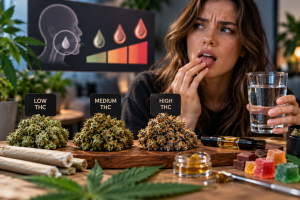
Can Different Cannabis Products Cause Cottonmouth?
Yes. Weed dry mouth isn’t limited to smoking cannabis flower.
Because cannabinoids themselves are associated with reduced saliva production, cottonmouth may occur with multiple consumption methods.
Cannabis flower remains one of the most traditional options, but concentrates, vapes, oils, capsules, beverages, and edibles may also produce dry-mouth sensations.
Smoking can additionally irritate the mouth and throat, which may make dryness feel more uncomfortable. Vapor can also feel drying or irritating to some consumers.
Edibles avoid smoke exposure, but that doesn’t mean they eliminate cottonmouth. Once THC takes effect, dry mouth may still occur.
Why Saliva Is Important for Oral Health
Saliva does considerably more than simply keep your mouth feeling comfortable.
It helps lubricate oral tissues, assists with swallowing and digestion, washes away food particles, and contributes to the natural protection of teeth and gums. Saliva also plays a role in maintaining the environment inside the mouth.
Temporary Weed dry mouth is usually more of an inconvenience than a serious problem. Persistent or frequent dry mouth, however, deserves greater attention.
Reduced saliva over extended periods can contribute to oral-health problems. This is particularly relevant for frequent cannabis consumers who repeatedly experience prolonged cottonmouth.
Good oral hygiene therefore remains important.
Helpful Tips for Managing Weed Dry Mouth
One of the simplest approaches is keeping water readily available before, during, and after cannabis consumption.
Take small, regular sips rather than trying to drink a huge amount at once. Water can moisturize the mouth and throat and help alleviate the uncomfortable sensation.
Sugar-free gum may also help because chewing stimulates saliva production. Sugar-free lozenges can provide a similar effect for some people.
Avoid relying heavily on sugary drinks or candy for relief. They may temporarily make your mouth feel more comfortable, but frequently exposing teeth to sugar isn’t ideal, particularly when saliva production is already reduced.
Maintaining normal hydration throughout the day is generally more useful than waiting until cottonmouth becomes intense.
Be Careful With Alcohol and Caffeine
Some beverages may make Weed dry mouth feel worse.
Alcohol can contribute to dehydration and can also increase impairment when combined with cannabis. For that reason, using alcohol as a solution for cottonmouth isn’t advisable.
Highly caffeinated beverages may also feel drying for certain people, particularly when consumed in large quantities.
Water is usually the simplest option. If you prefer something with more flavour, consider a non-alcoholic, low-sugar beverage.
The objective isn’t excessive fluid consumption. It’s simply maintaining comfortable, normal hydration.

Consider Your Cannabis Intake
If cottonmouth becomes consistently uncomfortable, reconsidering how much cannabis you’re consuming may help.
Higher cannabis intake can intensify multiple THC-related effects. Using less may produce a more manageable experience, particularly for consumers with lower tolerance.
This is especially relevant with edibles.
Unlike inhaled cannabis, edible THC can take substantially longer to produce noticeable effects and can last considerably longer. Taking additional servings too quickly can result in stronger effects than expected—including potentially more persistent dry mouth.
Following labeled serving information and allowing adequate time for effects to develop can help reduce unintended overconsumption.
Maintain Good Oral Hygiene
People who consume cannabis regularly should pay particular attention to oral care.
Brush your teeth thoroughly with fluoride toothpaste and clean between your teeth regularly. Routine dental examinations are also valuable because a dental professional can identify early signs of problems that may not yet cause symptoms.
If you’re frequently experiencing dry mouth, mention it to your dentist.
Persistent dryness may have causes unrelated to cannabis, including certain medications or medical conditions. A healthcare or dental professional can help determine whether additional evaluation is appropriate.
Are There Benefits to Understanding Cannabis Dry Mouth?
Understanding Weed dry mouth has practical benefits even though cottonmouth itself isn’t a health benefit.
Knowing why it happens can prevent misconceptions, such as assuming every episode of dry mouth automatically means severe dehydration. It can also encourage cannabis consumers to think more carefully about hydration, dosage, product potency, and oral hygiene.
Recognizing side effects is part of responsible cannabis consumption.
Consumers who understand their individual reactions can make more informed choices about products, amounts, and consumption methods rather than simply ignoring uncomfortable symptoms.
When Should You Be Concerned About Dry Mouth?
Occasional cottonmouth associated with cannabis typically resolves as the cannabis effects wear off.
However, dry mouth that persists when you’re not using cannabis should not automatically be attributed to weed.
If dryness becomes chronic, causes difficulty eating or swallowing, contributes to mouth sores, or occurs alongside other unusual symptoms, consider discussing it with a doctor or dentist.
Medications are another important consideration. Many prescription and over-the-counter medicines can cause dry mouth. Combining several contributing factors may make symptoms considerably more noticeable.
Persistent symptoms deserve professional evaluation rather than self-diagnosis.
Responsible Cannabis Use Can Improve the Overall Experience
Cannabis affects everyone differently, which is why understanding personal tolerance is so important.
Choosing an appropriate amount, allowing sufficient time to evaluate the effects, staying normally hydrated, and avoiding unnecessary mixing with alcohol can make cannabis consumption more predictable.
For new or occasional consumers, starting with lower amounts can also reduce the likelihood of unexpectedly intense THC effects.
Remember that Weed dry mouth is only one possible cannabis side effect. THC may also cause impaired coordination, slower reaction time, anxiety, increased heart rate, dizziness, and short-term changes in attention or memory.
Cannabis should never be used before driving or operating machinery.
Final Thoughts on Weed Dry Mouth
Weed dry mouth, commonly known as cottonmouth, is one of the most recognizable effects associated with cannabis. Rather than being caused exclusively by dehydration, it appears to be connected partly to how cannabinoids influence the body’s normal salivary processes.
Fortunately, occasional cottonmouth can often be managed with simple habits. Maintain normal hydration, keep water nearby, consider sugar-free gum, take care of your teeth and gums, and pay attention to how different cannabis products and amounts affect you.
If dry mouth continues long after cannabis effects have worn off or becomes a recurring problem, consult a dental or healthcare professional.
For adults who legally purchase cannabis, product quality, transparent labeling, responsible dosing, and local regulations should always be priorities. Consumers considering Supreme Dispensary should verify that the retailer is licensed and legally permitted to sell and deliver cannabis in their jurisdiction. Choosing regulated cannabis products from authorized sources provides greater assurance around labeling, testing, and product standards while helping consumers make more informed decisions.