Trying cannabis for the first time can bring a mixture of curiosity, excitement, and uncertainty. With cannabis becoming increasingly familiar to adults in places such as Canada, many newcomers want to know what they might experience, how long the effects can last, and what factors influence their response. Understanding your First Time Smoking Weed can help you approach cannabis with realistic expectations and greater awareness of its potential effects.
Cannabis experiences vary considerably from person to person. One individual may feel relaxed and cheerful, while another may feel sleepy, intensely focused on sensory details, or even anxious. The amount consumed, THC concentration, individual sensitivity, environment, and method of consumption can all influence the experience.
For adults who legally choose to use cannabis, learning about these variables before consuming it can reduce uncertainty and encourage more responsible decisions.
What Happens When You Smoke Weed for the First Time?
During your First Time Smoking Weed, cannabinoids in cannabis enter the body through the lungs and reach the bloodstream relatively quickly. THC, or tetrahydrocannabinol, is the cannabinoid primarily responsible for cannabis’s intoxicating effects.
THC interacts with the body’s endocannabinoid system, including cannabinoid receptors found throughout the brain and nervous system. This can temporarily influence mood, memory, coordination, appetite, perception, and other functions.
Inhaled cannabis generally produces effects considerably faster than edible cannabis. Someone smoking or vaping cannabis may begin noticing changes within minutes, although the timing and intensity vary.
Interestingly, not everyone reports a dramatic effect during their first experience. Individual differences in inhalation, product potency, physiology, and sensitivity can all contribute to the response.
What Does Your First Cannabis High Feel Like?
There is no single experience that defines a cannabis high.
Some people describe feelings of relaxation, amusement, sociability, or euphoria. Music may seem more immersive, food may taste particularly appealing, and ordinary activities can feel more interesting.
Others experience physical sensations such as heaviness, warmth, tingling, or a feeling of sinking comfortably into a chair.
Time perception can also change. A short period may seem considerably longer than it actually was.
Your First Time Smoking Weed can also involve less enjoyable effects. THC may cause nervousness, dizziness, confusion, racing thoughts, or paranoia, particularly when someone consumes more than they are comfortable with.
This unpredictability is one reason beginners benefit from being cautious with THC.

Potential Benefits People Associate With Cannabis
Adults use cannabis for many different reasons, ranging from recreational enjoyment to symptom management under medical guidance.
One commonly reported effect is relaxation. Some consumers find that cannabis helps them unwind after demanding activities or creates a feeling of physical calm.
Cannabis may also temporarily alter mood and sensory perception. This can make activities such as listening to music, watching movies, eating, or spending time in a comfortable environment feel different.
Certain cannabinoids are also being researched or medically used in specific contexts involving symptoms such as pain, nausea, appetite loss, and some forms of spasticity. However, evidence varies considerably depending on the condition and cannabis product involved.
Potential benefits should therefore not be treated as guaranteed effects, particularly for someone experiencing their First Time Smoking Weed.
THC Plays a Major Role in Your Experience
Understanding THC is particularly important for beginners.
Products with higher THC concentrations can produce stronger intoxication and may increase the likelihood of adverse reactions. A product being more potent does not necessarily make it higher quality or more appropriate for a first-time consumer.
In fact, high-potency products can make the experience harder to predict.
A beginner may have little information about their sensitivity to THC because they have no previous cannabis experience to use as a reference.
Choosing lower-THC options is therefore one way adults who decide to consume cannabis can reduce their exposure while learning how cannabis affects them.
THC and CBD Are Different
THC isn’t the only important cannabinoid found in cannabis.
CBD, or cannabidiol, does not produce the characteristic intoxicating high associated with THC. Cannabis products can contain predominantly THC, predominantly CBD, or varying proportions of both cannabinoids.
For a First Time Smoking Weed, understanding this distinction can be useful when reading cannabis labels.
Rather than selecting cannabis based exclusively on strain names or packaging, consumers can examine THC and CBD concentrations to get a better idea of the product’s cannabinoid profile.
Health Canada recommends that new consumers look for products containing lower amounts of THC and equal or higher amounts of CBD when possible.
Why Your Surroundings Can Matter
Your surroundings can strongly influence how a cannabis experience feels.
Someone consuming cannabis in an unfamiliar, crowded, or stressful environment may respond differently than they would in a familiar and comfortable place.
Mood matters too.
If someone already feels extremely anxious or uncomfortable before consuming cannabis, intoxication may intensify those feelings rather than automatically making them disappear.
For a First Time Smoking Weed, a calm environment without important responsibilities can therefore reduce unnecessary complications.
Being around trusted people can also be reassuring if the effects feel stronger or stranger than expected.
Common Short-Term Effects of Cannabis
Cannabis can produce several short-term effects beyond euphoria and relaxation.
Dry mouth and red eyes are commonly associated with cannabis consumption. Increased appetite—the famous cannabis “munchies”—can also occur.
THC can temporarily affect attention, short-term memory, reaction time, judgment, coordination, and perception.
Some people become talkative and energetic, whereas others become quiet or sleepy.
Unpleasant effects can include dizziness, nausea, anxiety, rapid heartbeat, confusion, panic, and paranoia.
Recognizing that both pleasant and unpleasant reactions are possible helps create realistic expectations for a First Time Smoking Weed.
Why Everyone’s First Experience Is Different
It can be tempting to ask an experienced friend exactly what cannabis will feel like, but their answer cannot reliably predict your experience.
Biological differences influence how individuals respond to cannabinoids.
Tolerance is another major factor. Someone who consumes cannabis frequently can respond very differently from someone with no tolerance.
Product characteristics matter as well. THC concentration, CBD concentration, cannabinoid ratios, and other chemical components can influence the experience.
Even circumstances such as mood and environment can contribute to differences.
This means that comparing your First Time Smoking Weed directly with someone else’s experience is rarely useful.
Cannabis Strains and Your First Experience
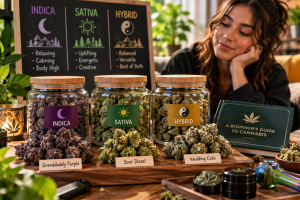
Cannabis products are commonly marketed as indica, sativa, or hybrid varieties.
Consumers often associate indica products with relaxation and sativa products with energetic or uplifting experiences. However, these broad categories are not reliable predictors of exactly how an individual product will affect someone.
Cannabinoid concentration provides more useful information.
Someone choosing cannabis for the first time should therefore pay particular attention to THC and CBD information rather than assuming a strain labelled “indica” will automatically make them relaxed or a “sativa” will necessarily make them energetic.
Individual response remains important regardless of the label.
Avoid Mixing Cannabis With Alcohol
Combining cannabis with alcohol can make intoxication considerably less predictable.
Both substances impair important abilities needed for activities such as driving. Using them together can increase impairment and may contribute to unpleasant effects such as dizziness, nausea, vomiting, and difficulty concentrating.
For someone’s First Time Smoking Weed, adding alcohol also makes it much harder to understand which effects are actually coming from cannabis.
Avoiding combinations with other intoxicating substances provides a clearer and more manageable experience.
Don’t Drive After Using Cannabis
Cannabis and driving should never be combined.
THC can impair reaction time, coordination, attention, judgment, and decision-making. Someone may feel capable of driving while still experiencing meaningful impairment.
This applies not only to first-time consumers but also to experienced cannabis users.
Planning transportation before consuming cannabis prevents an intoxicated person from having to make that decision later.
A first cannabis experience should happen when there is no need to drive, operate machinery, or perform safety-sensitive tasks afterward.
What If the Experience Feels Too Strong?
Sometimes a First Time Smoking Weed becomes more intense than expected.
Someone may notice racing thoughts, anxiety, dizziness, paranoia, nausea, or an uncomfortable awareness of their heartbeat.
If this happens, consuming additional cannabis is unlikely to help.
Moving to a quiet, familiar environment and reducing unnecessary stimulation may make the experience easier to manage. A trusted sober person can also provide reassurance.
If someone develops severe symptoms, loses consciousness, has difficulty breathing, experiences chest pain, becomes dangerously confused or agitated, or otherwise appears to require urgent medical attention, emergency medical services should be contacted.
Smoking Versus Cannabis Edibles
New consumers should also understand that smoking cannabis and eating cannabis are substantially different experiences.
Smoking typically produces effects relatively quickly, making changes easier to notice soon after consumption.
Edibles have a delayed onset because cannabinoids must pass through the digestive system and undergo metabolism. Full effects can take considerably longer to develop and may persist much longer.
This delay can lead inexperienced consumers to take additional edibles before the original serving has reached its full effect.
Someone’s First Time Smoking Weed should therefore not be used to predict exactly how they will respond to an edible cannabis product.
Building a More Informed First Cannabis Experience
Knowledge can make cannabis use less unpredictable.
Before consuming a legal cannabis product, read its label and understand the THC and CBD concentrations. Avoid treating high potency as a goal, especially without an established tolerance.
Choose a comfortable environment and make sure transportation and responsibilities have already been handled.
Avoid combining cannabis with alcohol or other intoxicating substances, and store unused products securely away from children and pets.
Most importantly, remember that there is no requirement to consume more simply because other people are doing so.
Your individual response matters more than someone else’s tolerance.
Final Thoughts on Your First Time Smoking Weed
A First Time Smoking Weed can feel very different from what movies, friends, or online stories suggest. Some adults experience relaxation, laughter, altered sensory perception, increased appetite, or euphoria, while others experience little effect or encounter unwanted reactions such as anxiety, dizziness, or paranoia.
Understanding THC potency, CBD content, individual sensitivity, environment, and the rapid onset associated with inhaled cannabis can help adults who legally choose cannabis make better-informed decisions.
You may encounter retailers such as Supreme Dispensary while researching cannabis online, but online availability alone does not establish that a seller is authorized to sell cannabis in your province or territory. Rather than recommending a particular unverified retailer, the safest approach is to purchase cannabis through a legal, regulated source in your jurisdiction, where cannabinoid information and product requirements can be verified.
Ultimately, a positive first cannabis experience isn’t about consuming the strongest product possible. It is about understanding what you’re consuming, recognizing that everyone responds differently, and making responsible decisions that prioritize safety, comfort, and moderation.