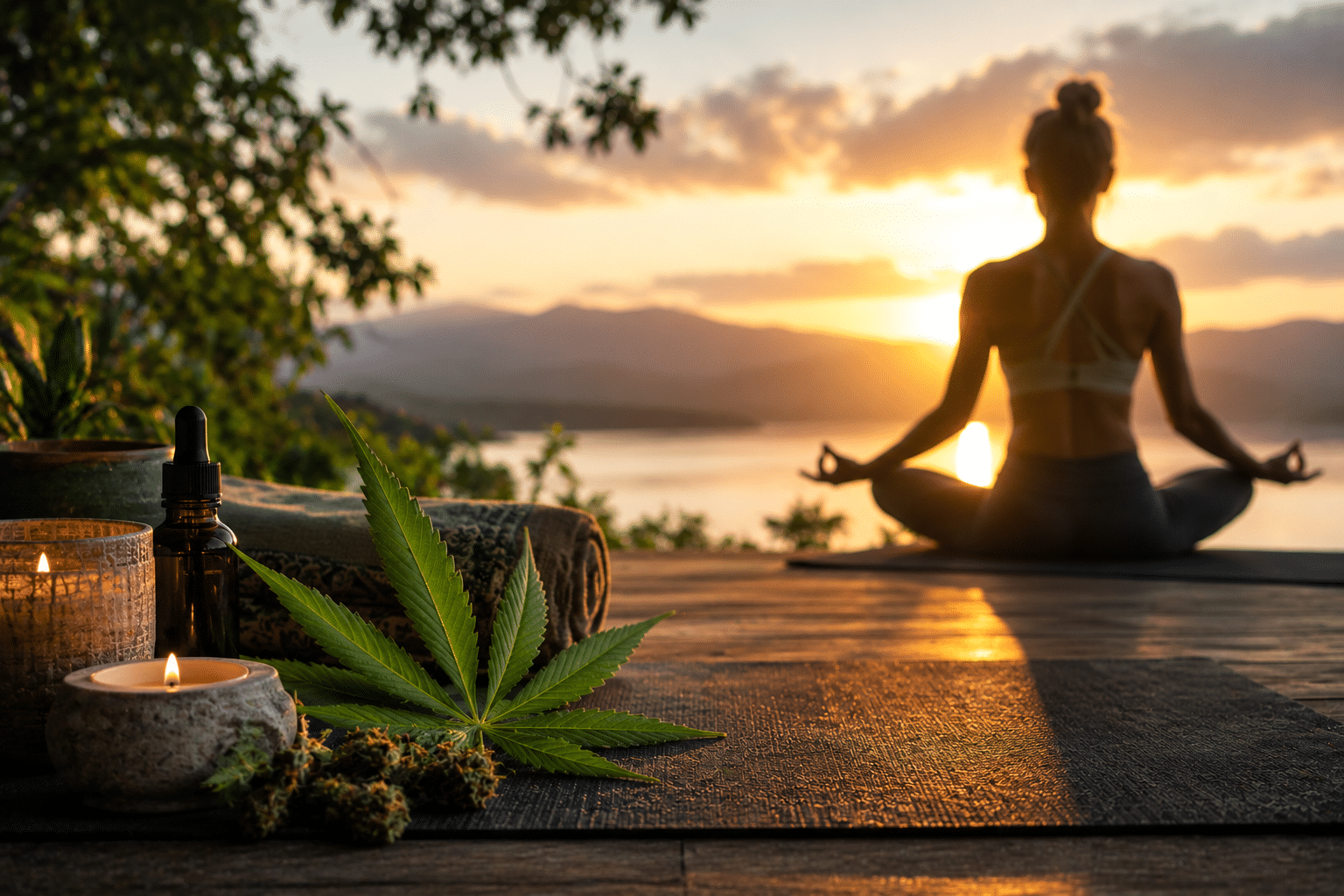
Yoga has been practiced for centuries as a way to connect movement, breathing, awareness, and relaxation. Cannabis has an equally long history of human use, although its effects and purposes vary considerably between individuals. As wellness culture continues to evolve, the combination of Cannabis and Yoga has attracted attention from adults interested in exploring a different approach to mindful movement.
For some experienced cannabis consumers, cannabis may make a gentle yoga session feel more immersive or relaxing. Others may find THC distracting, impairing, or uncomfortable. The experience depends on the individual, the cannabis product, potency, tolerance, environment, and type of yoga being practiced.
Understanding these variables is important before combining the two. Cannabis isn’t necessary for yoga, nor does it automatically improve a practice. But for adults who legally consume cannabis and understand how it affects them, exploring Cannabis and Yoga thoughtfully may offer an interesting approach to relaxation and body awareness.
Understanding the Connection Between Cannabis and Yoga
Yoga encourages practitioners to pay attention to breathing, posture, physical sensations, and the present moment. Many styles also emphasize slowing down mental distractions and developing greater awareness of the body.
Cannabis can alter sensory perception, mood, attention, and the perception of time. These effects help explain why some consumers feel cannabis changes their experience during yoga.
The relationship between Cannabis and Yoga is therefore less about achieving a stronger high and more about how altered perception interacts with mindful movement.
Some people report feeling more absorbed in music, breathing, or physical sensations after consuming cannabis. Others may become distracted or anxious.
Neither response is universal.
Potential Benefits of Cannabis and Yoga
The benefits associated with combining cannabis and yoga are largely subjective. Research shouldn’t be interpreted as proving that cannabis makes yoga inherently healthier or more effective.
However, experienced consumers commonly explore the combination for several reasons.
A Greater Sense of Relaxation
Relaxation is one of the most common reasons adults use cannabis recreationally.
When paired with slower yoga styles, some consumers may experience an increased sense of calm that helps them settle into the session.
Gentle practices such as restorative yoga or slow stretching may be better suited to this approach than physically demanding classes requiring excellent coordination.
Increased Awareness of Physical Sensations
Yoga involves paying close attention to how different parts of the body feel.
Cannabis can change sensory perception, potentially making certain physical sensations feel more noticeable.
For some people, this may encourage slower and more deliberate movement. However, altered perception can also make it harder to recognize discomfort accurately, which means practitioners should never use cannabis as a reason to push deeper into a pose.
A More Immersive Experience
Music, breathing, lighting, and environmental details can sometimes feel more pronounced after cannabis consumption.
For adults who already respond comfortably to cannabis, this may make a quiet yoga practice feel particularly immersive.
The goal should still remain mindful movement rather than maximizing intoxication.
Cannabis and Mindfulness
Mindfulness involves intentionally paying attention to present experiences without immediately reacting to them.
Yoga frequently incorporates this concept through breathing exercises and movement.
Some consumers describe cannabis as helping them temporarily disengage from everyday distractions. In the context of Cannabis and Yoga, this may make it easier for certain individuals to focus on breathing or physical sensations.
But the opposite can also happen.
High doses of THC may produce racing thoughts, anxiety, confusion, or difficulty concentrating. Someone experiencing these effects is unlikely to find them beneficial during yoga.
This is why individual tolerance matters enormously.
Choosing the Right Style of Yoga
Not every yoga practice is equally appropriate when someone is intoxicated.
Slower, lower-risk styles are generally more compatible with altered coordination than highly athletic practices.
Restorative yoga emphasizes supported poses and relaxation, while yin yoga typically involves holding relatively gentle positions for longer periods.
A basic floor-based stretching routine may also be easier to navigate.
By comparison, hot yoga, complicated balancing sequences, inversions, or fast-paced power yoga can create additional risks when coordination, judgment, hydration, or balance are affected.
When combining Cannabis and Yoga, simplicity is often the safer approach.
THC vs. CBD Considerations
Cannabis products can contain different concentrations of cannabinoids, particularly THC and CBD.
THC produces intoxicating effects and can alter perception, reaction time, coordination, and judgment.
CBD is generally considered non-intoxicating, although products containing CBD aren’t automatically appropriate for everyone and may interact with certain medications.
Someone interested in Cannabis and Yoga should pay close attention to cannabinoid content rather than selecting a product based entirely on strain name or marketing language.
Higher THC isn’t necessarily better.
In fact, excessive intoxication can work directly against the focus and controlled movement that yoga requires.
Why Terpenes Get Attention
Terpenes are naturally occurring aromatic compounds found in cannabis and many other plants.
Examples commonly found in cannabis include myrcene, limonene, pinene, linalool, and caryophyllene.
They contribute significantly to the aroma and flavour of different cannabis cultivars.
Terpenes are sometimes marketed using broad claims about specific effects. Consumers should be cautious about treating those claims as guarantees. The overall cannabis experience involves cannabinoids, terpenes, serving size, tolerance, individual physiology, and environment.
When choosing cannabis, terpene information may be most useful for identifying aroma and flavour profiles you already enjoy.
Start With Familiar Cannabis
Trying an unfamiliar high-potency product immediately before yoga isn’t ideal.
Anyone exploring Cannabis and Yoga should already understand how a particular cannabis product generally affects them.
Different strains and formulations can produce noticeably different subjective experiences.
A familiar product reduces some uncertainty, although cannabis effects can still vary from one occasion to another.
Consumers with low THC tolerance should be especially cautious because excessive intoxication may affect balance and coordination.
Create a Comfortable Environment
Setting can influence both cannabis and yoga experiences.
A quiet, familiar environment can make it easier to focus without unnecessary distractions. Consider comfortable lighting, an uncluttered practice area, an appropriate yoga mat, and enough physical space to move safely.
Remove objects that could create a tripping hazard.
Water should also be readily available.
Music can help establish the atmosphere if you enjoy practicing with sound, but it shouldn’t become so distracting that you stop paying attention to your movement.
A comfortable environment supports the fundamental objective of Cannabis and Yoga: mindful, controlled movement.
Focus on Breathing
Breathing is central to many yoga practices.
Slow, deliberate breathing can provide a simple anchor for attention throughout a session.
Rather than trying to perform increasingly complicated poses, an altered yoga practice may be better centered around comfortable stretches and breathing.
Notice how the body feels during each position.
If you experience dizziness, nausea, anxiety, pain, or unusual discomfort, stop the session rather than pushing through it.
Yoga isn’t a competition, and cannabis shouldn’t change that principle.
Don’t Push Beyond Your Normal Flexibility
This is one of the most important considerations when combining Cannabis and Yoga.
Cannabis can change how physical sensations are perceived. Feeling more relaxed doesn’t necessarily mean joints, tendons, or muscles have suddenly become capable of safely moving beyond their normal range.
Avoid forcing stretches.
Use familiar poses and maintain conservative limits, especially if THC has affected your coordination or perception.
Props such as blocks and cushions can also make gentle poses more comfortable without requiring extreme flexibility.
Consider Timing and Consumption Method
Different cannabis consumption methods have different onset times and durations.
Inhaled cannabis generally produces effects relatively quickly, while edible THC can take considerably longer to become noticeable and may remain active for much longer.
This difference is especially important when planning physical activity.
Taking additional edible cannabis because effects haven’t appeared quickly enough can result in unexpectedly strong intoxication later.
Anyone unfamiliar with a product should avoid experimenting with it immediately before exercise.
Hydration Still Matters
Yoga can involve physical exertion, particularly in warmer environments.
Cannabis doesn’t eliminate the body’s need for appropriate hydration.
Keep water nearby and pay attention to signs of overheating or dizziness.
Hot yoga deserves additional caution because high temperatures combined with cannabis-related impairment may make it more difficult to accurately judge physical limits.
A comfortable room-temperature environment is generally a more sensible choice when exploring Cannabis and Yoga.
Practice Alone or With Others?
Some people prefer private yoga because it allows them to move at their own pace.
Others enjoy the structure of group sessions.
If cannabis is involved, local laws and studio policies matter. Never assume that cannabis consumption is acceptable at a yoga studio or public wellness event.
Practicing privately in a safe environment can provide greater control over pace and surroundings.
If participating in a cannabis-friendly event where legally permitted, consumers should still understand their tolerance and avoid becoming excessively intoxicated.
Common Mistakes to Avoid
One mistake is assuming more cannabis will create a deeper yoga experience.
Excessive THC may impair balance, concentration, and judgment, making the session less enjoyable and potentially less safe.
Another mistake is attempting difficult poses while intoxicated.
Inversions, advanced balances, and movements with significant injury potential should be avoided when coordination is impaired.
Consumers should also avoid combining cannabis with alcohol before yoga. Mixing intoxicants can increase impairment and make physical reactions harder to predict.
Finally, don’t drive to or from a yoga session while impaired.
Who Should Be Particularly Cautious?
Cannabis isn’t appropriate for everyone.
Individuals taking medications, managing health conditions, pregnant or breastfeeding individuals, or people with concerns about how cannabis affects their mental or physical health should seek appropriate professional guidance.
People who regularly experience anxiety, dizziness, paranoia, or uncomfortable reactions from THC shouldn’t assume yoga will prevent those effects.
The combination should never be treated as a substitute for medical treatment.
Making Cannabis and Yoga About Balance
The most useful concept behind Cannabis and Yoga is balance.
Yoga already encourages awareness rather than excess. Applying the same philosophy to cannabis means understanding personal limits and avoiding the assumption that stronger products automatically create better experiences.
For someone who chooses to combine them, a gentle session might focus on comfortable floor poses, breathing, stretching, relaxing music, and a calm environment.
Cannabis should remain secondary to the practice rather than becoming its entire purpose.
Final Thoughts
Cannabis and Yoga represent an interesting intersection between modern cannabis culture and an ancient mind-body practice. For some experienced adult consumers, carefully combining the two may create a relaxing, immersive environment that encourages slower movement and greater attention to physical sensations.
However, cannabis can also impair coordination, alter judgment, increase anxiety, and make physical sensations harder to interpret. Start conservatively, stick to familiar products, choose gentle yoga styles, remain hydrated, and avoid challenging poses when impaired.
The best experience isn’t necessarily the most intense one. It’s the experience that allows you to remain comfortable, mindful, and within your physical limits.
For Canadian adults interested in exploring cannabis products for their personal relaxation routines, Supreme Dispensary offers a selection of flower and other cannabis options worth considering. When shopping, review current cannabinoid information, potency, product quality, customer feedback, and applicable local regulations. With the right product, responsible consumption, and a mindful approach, Supreme Dispensary can be a convenient destination for adults interested in exploring the connection between Cannabis and Yoga.