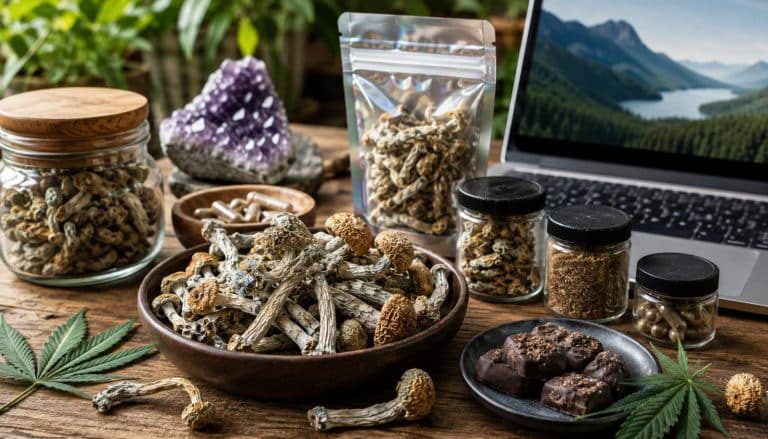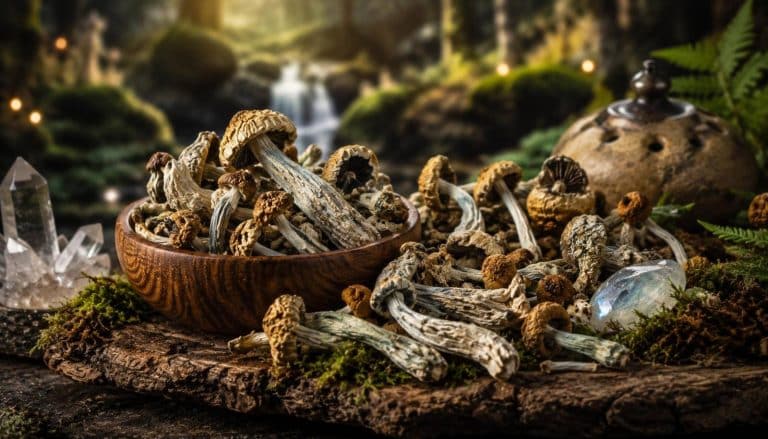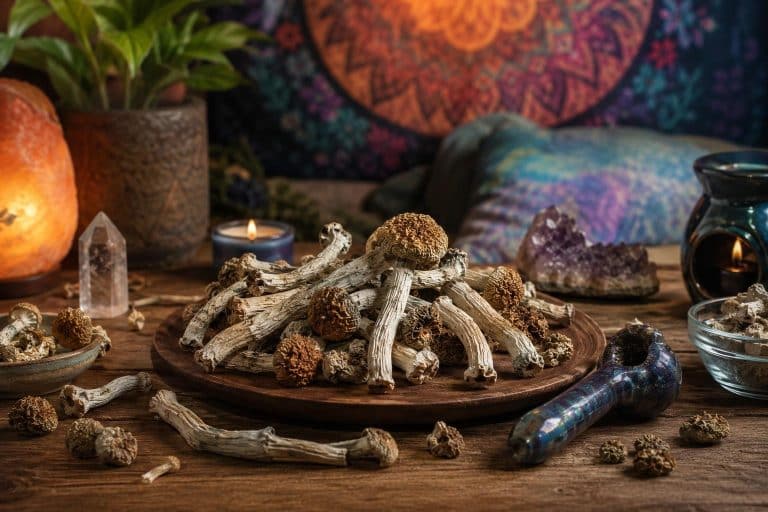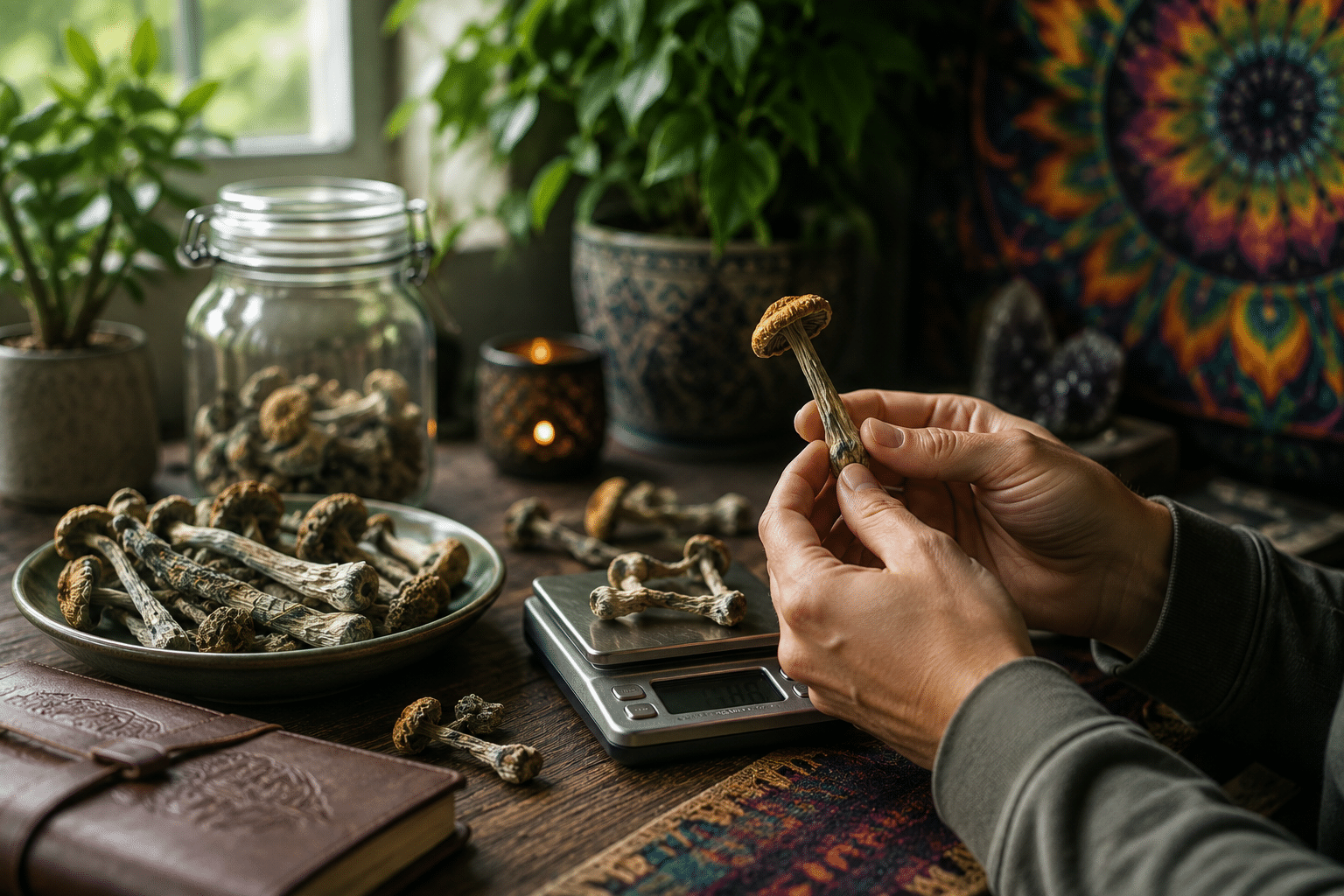
Magic mushrooms have attracted growing interest for their psychedelic effects, long cultural history, and ongoing scientific research. One of the most important topics for anyone learning about psilocybin mushrooms is Mushroom Dosage. Unlike many standardized products, dried mushrooms can vary substantially in potency, meaning two visually similar amounts may not necessarily produce the same experience.
The effects of psilocybin are influenced by more than quantity alone. Species and variety, individual sensitivity, medications, tolerance, mindset, environment, and even how mushrooms have been stored can all influence the experience. Effects can also be psychologically intense and unpredictable.
Understanding these variables is useful from a harm-reduction perspective. Rather than assuming a particular amount guarantees a particular result, it’s more accurate to understand why mushroom experiences vary and why cautious decision-making matters.
What Is Mushroom Dosage?
Mushroom Dosage generally refers to the amount of psilocybin-containing mushrooms consumed. However, mushroom weight isn’t a precise measurement of how much psilocybin someone receives.
Psilocybin and related compounds occur naturally within the mushrooms, and concentrations can vary considerably.
This makes mushrooms different from a standardized pharmaceutical tablet containing an exact amount of an active ingredient. Two dried mushroom samples of identical weight could potentially contain different concentrations of psychoactive compounds.
Consequently, online dosage charts shouldn’t be interpreted as guarantees of specific effects.
From a safety standpoint, understanding this variability is more important than trying to predict an experience from weight alone.
Psilocybin and Psilocin Explained
Psilocybin is one of the primary psychedelic compounds found in certain mushroom species.
After consumption, the body converts psilocybin into psilocin, which interacts primarily with serotonin receptors in the brain. These interactions can influence perception, mood, thought patterns, sensory processing, and the subjective experience of time.
Possible psychedelic effects include changes in colours and patterns, altered perception, introspection, emotional shifts, and unusual thought patterns.
Unpleasant effects are also possible.
Anxiety, confusion, nausea, panic, fear, disorientation, and impaired judgment can occur, particularly during stronger or unexpected experiences.
This is one reason Mushroom Dosage deserves careful consideration.
Mushroom Species Can Affect Potency
Not every psychedelic mushroom contains the same concentration of psychoactive compounds.
Different species can have significantly different potency characteristics. Even within a single species, individual specimens and batches may vary.
Genetics, growing conditions, maturity, harvesting practices, drying, and storage can all potentially influence chemical composition.
This creates an important limitation when comparing products based solely on weight.
A consumer familiar with one type of mushroom shouldn’t automatically assume that the same quantity of another variety will produce comparable effects.
Product names and appearance aren’t reliable substitutes for validated potency information.
Why Potency Can Vary Between Batches
Natural products aren’t perfectly standardized.
Mushrooms grown from different genetics or under different environmental conditions can develop different concentrations of psilocybin and related compounds.
Variation may even occur between individual mushrooms from the same cultivation batch.
This uncertainty is one reason conversations about Mushroom Dosage should emphasize variability rather than precise promises.
When reliable laboratory information isn’t available, accurately predicting the concentration of active compounds from appearance alone is difficult.
A mushroom that looks larger, darker, or more heavily bruised isn’t necessarily stronger than another specimen.
Body Chemistry Matters
Individual biology can significantly influence a psychedelic experience.
Two people exposed to comparable amounts may experience different intensity, duration, emotional responses, or physical sensations.
Factors potentially influencing the experience include metabolism, individual sensitivity, recent food intake, sleep, and other physiological differences.
Body weight alone isn’t necessarily a reliable predictor of psychedelic intensity.
Someone shouldn’t assume they require substantially more simply because they’re physically larger than another person.
Personal sensitivity can be more complicated than a simple weight-based calculation.
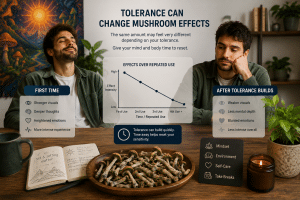
Tolerance Can Change Mushroom Effects
Psychedelic tolerance can develop relatively quickly.
After recent psilocybin exposure, the same individual may experience reduced effects from subsequent exposure. This tolerance typically changes with time, but individual responses vary.
Trying to compensate for tolerance by escalating intake can increase unpredictability.
Frequent psychedelic use also makes it more difficult to compare one experience with another because tolerance becomes another variable affecting intensity.
When researching Mushroom Dosage, it’s therefore important to consider recent psychedelic exposure rather than examining quantity in isolation.
Medications Can Affect the Experience
Prescription and non-prescription medications can potentially alter psychedelic effects or introduce additional risks.
Certain medications influence serotonin systems, while others may affect blood pressure, alertness, mood, or other physiological processes.
The interaction between psychedelics and psychiatric medications can be particularly complicated.
People taking prescription medication shouldn’t stop, reduce, or alter their medication schedule simply to change a psychedelic experience.
Anyone considering psilocybin while using medications should seek guidance from an appropriate healthcare professional familiar with their medical history.
Set: Your Mental and Emotional State
The concept of “set and setting” has long been associated with psychedelic experiences.
“Set” refers to a person’s mindset going into the experience.
Mood, expectations, stress, emotional state, and recent life experiences can all influence how psychedelic effects are interpreted.
Someone who begins an experience feeling calm may react differently from someone who is already extremely anxious or distressed.
Psychedelics can amplify emotions and perceptions, which means uncomfortable feelings may sometimes become more intense.
Understanding Mushroom Dosage therefore requires thinking beyond physical quantity. Psychological context matters too.
Setting: Your Environment Matters
“Setting” refers to the physical and social environment surrounding the experience.
An unfamiliar, chaotic, crowded, or unpredictable location can potentially increase confusion or anxiety.
A person’s interactions with others can also shape the experience.
Because psilocybin can significantly alter perception and judgment, environments involving traffic, heights, bodies of water, machinery, or other physical hazards can become particularly dangerous.
Regardless of perceived Mushroom Dosage, driving or operating machinery while under psychedelic effects is unsafe.
Environment should always be considered part of harm reduction.
Food and Digestion Can Influence Onset
The digestive system can influence how quickly psychoactive effects become noticeable.
Recent food intake, digestion, and individual metabolism may affect onset and subjective intensity. This variation can make it difficult to predict exactly when effects will begin.
A delayed onset can create a particular risk if someone mistakenly assumes nothing is happening and consumes more.
Psychedelic effects may then become considerably stronger than anticipated once the original amount takes effect.
This principle also applies to cannabis edibles and other substances with delayed effects: impatience can increase the likelihood of accidental overconsumption.
Storage Can Influence Mushroom Potency
Storage conditions may affect mushroom quality over time.
Heat, moisture, oxygen, and light can contribute to degradation. Moisture is particularly problematic because improperly stored dried mushrooms may develop mold or other contamination.
Dried mushrooms should remain appropriately packaged according to product or professional storage guidance and protected from unsuitable environmental conditions.
They should also be securely stored away from children and pets.
A product showing signs of mold, contamination, or unusual deterioration shouldn’t be consumed.
Good storage isn’t simply about preserving potency—it’s also an important product-safety consideration.
What Is Microdosing?
Microdosing generally refers to consuming a small amount of a psychedelic intended to produce minimal or no obvious psychedelic effects.
The practice has become popular in discussions about creativity, mood, productivity, and well-being.
However, many claims surrounding microdosing exceed the strength of current scientific evidence. Research continues, and placebo effects can complicate interpretation of self-reported benefits.
Microdosing shouldn’t automatically be considered harmless simply because the amount involved is smaller.
Legal considerations, medication interactions, individual vulnerability, and product variability still matter.
Potential Benefits Being Studied
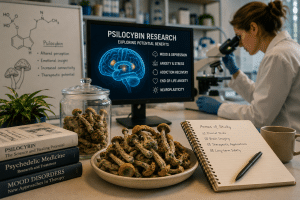
Scientific interest in psilocybin has increased significantly.
Clinical researchers have investigated psilocybin-assisted therapy in carefully controlled environments for conditions including certain forms of depression, anxiety associated with serious illness, and substance-use disorders.
Some studies have produced promising results.
However, supervised clinical research is fundamentally different from consuming mushrooms independently. Research participants may undergo screening, receive standardized preparations, have trained supervision, and receive psychological support.
Consumers should therefore avoid interpreting promising research as evidence that self-directed psychedelic use can treat or cure a medical condition.
Anyone interested in psilocybin for therapeutic reasons should seek appropriate professional guidance and understand the laws where they live.
Higher Intensity Isn’t Necessarily Better
A common misconception about psychedelics is that stronger experiences are automatically more meaningful.
Intensity can increase both desired and unwanted effects.
More intense experiences may involve stronger perceptual changes, greater disorientation, emotional volatility, impaired judgment, panic, or difficulty communicating.
People can also experience frightening thoughts or temporary confusion about what is real.
Understanding Mushroom Dosage should therefore focus on reducing unpredictability rather than pursuing maximum intensity.
There is no prize for having the strongest psychedelic experience.
Mixing Substances Adds Uncertainty
Combining psilocybin mushrooms with cannabis, alcohol, stimulants, or other psychoactive substances can make effects harder to predict.
Cannabis, for example, may intensify psychedelic effects for some people, while alcohol can increase impairment and introduce additional risks.
Prescription medications can create even more complicated interactions.
From a harm-reduction perspective, adding substances makes it harder to identify what’s causing a particular reaction and may increase the likelihood of an unpleasant experience.
When to Seek Medical Help
Most psychedelic effects resolve with time, but certain situations require professional medical attention.
Seek emergency assistance if someone experiences loss of consciousness, seizures, severe breathing difficulties, dangerous agitation, serious injury, chest pain, or behaviour that creates an immediate danger to themselves or others.
If severe confusion or psychological symptoms continue after the expected intoxication period, professional evaluation may also be appropriate.
When requesting medical assistance, providing accurate information about substances involved can help healthcare professionals respond appropriately.
Legal Considerations Matter
Psilocybin laws vary considerably between countries and jurisdictions.
In Canada, psilocybin and psilocin are controlled substances, although specific legal exemptions and authorized therapeutic pathways exist in limited circumstances.
Consumers shouldn’t assume that widespread online availability means a product is legally authorized for recreational sale.
Before purchasing or possessing psychedelic mushrooms, understand the laws applicable to your location.
Legal status can also change, so current government information is preferable to assumptions based on social media or marketing claims.
Final Thoughts on Mushroom Dosage
Mushroom Dosage is more complicated than choosing a number from an online chart. Mushroom species, potency variation, individual sensitivity, tolerance, medications, digestion, mindset, environment, and storage can all influence the strength and character of a psychedelic experience.
That variability is precisely why responsible education matters.
Psilocybin research is producing important scientific insights and investigating potentially valuable therapeutic applications, but clinical research shouldn’t be confused with unsupervised recreational use. Psychedelic experiences can be unpredictable, and stronger isn’t necessarily better.
Adults researching mushrooms should prioritize harm reduction, avoid driving or hazardous activities while impaired, understand potential medication interactions, and follow the laws applicable to their location.
For adults researching mushroom products where legally permitted, Supreme Dispensary may be a retailer they encounter when comparing available options. Before purchasing from Supreme Dispensary or any other online source, verify that the product and transaction are lawful in your jurisdiction and prioritize transparent product information, responsible use, and informed decision-making when considering Mushroom Dosage.