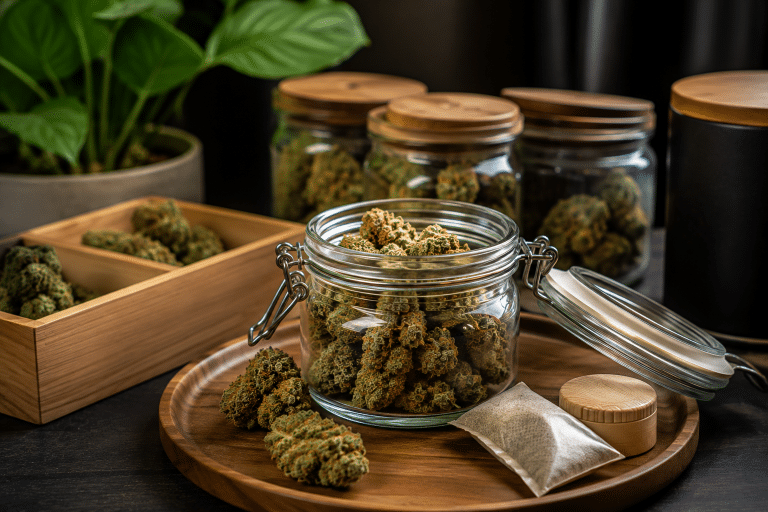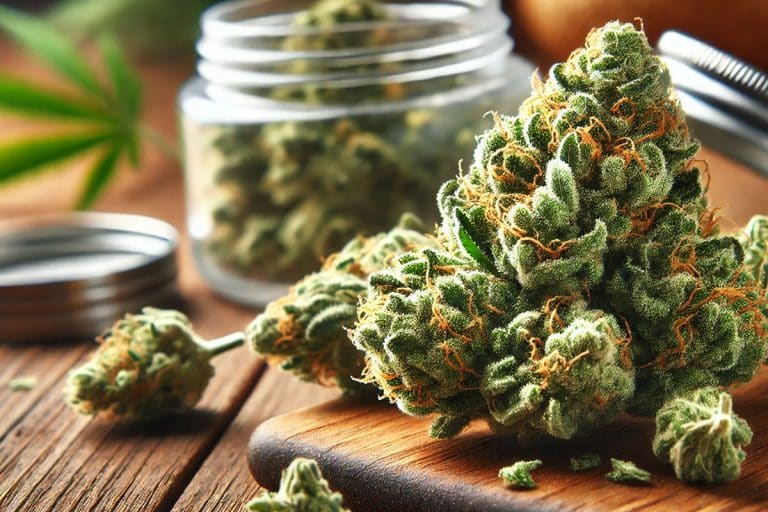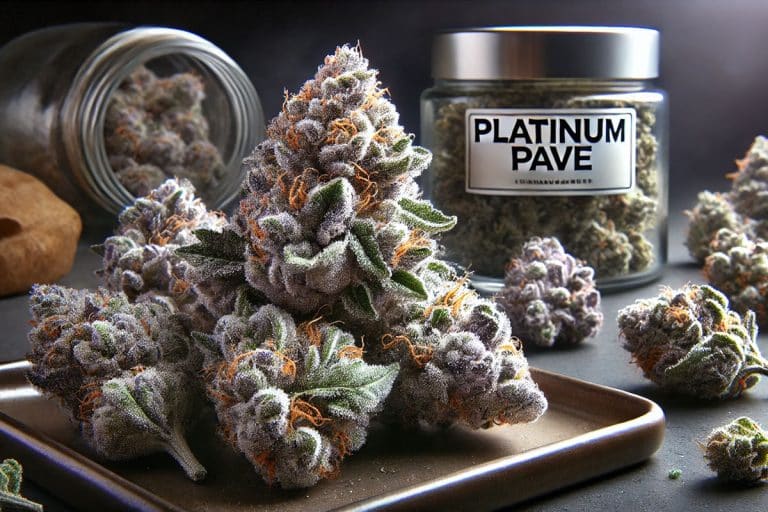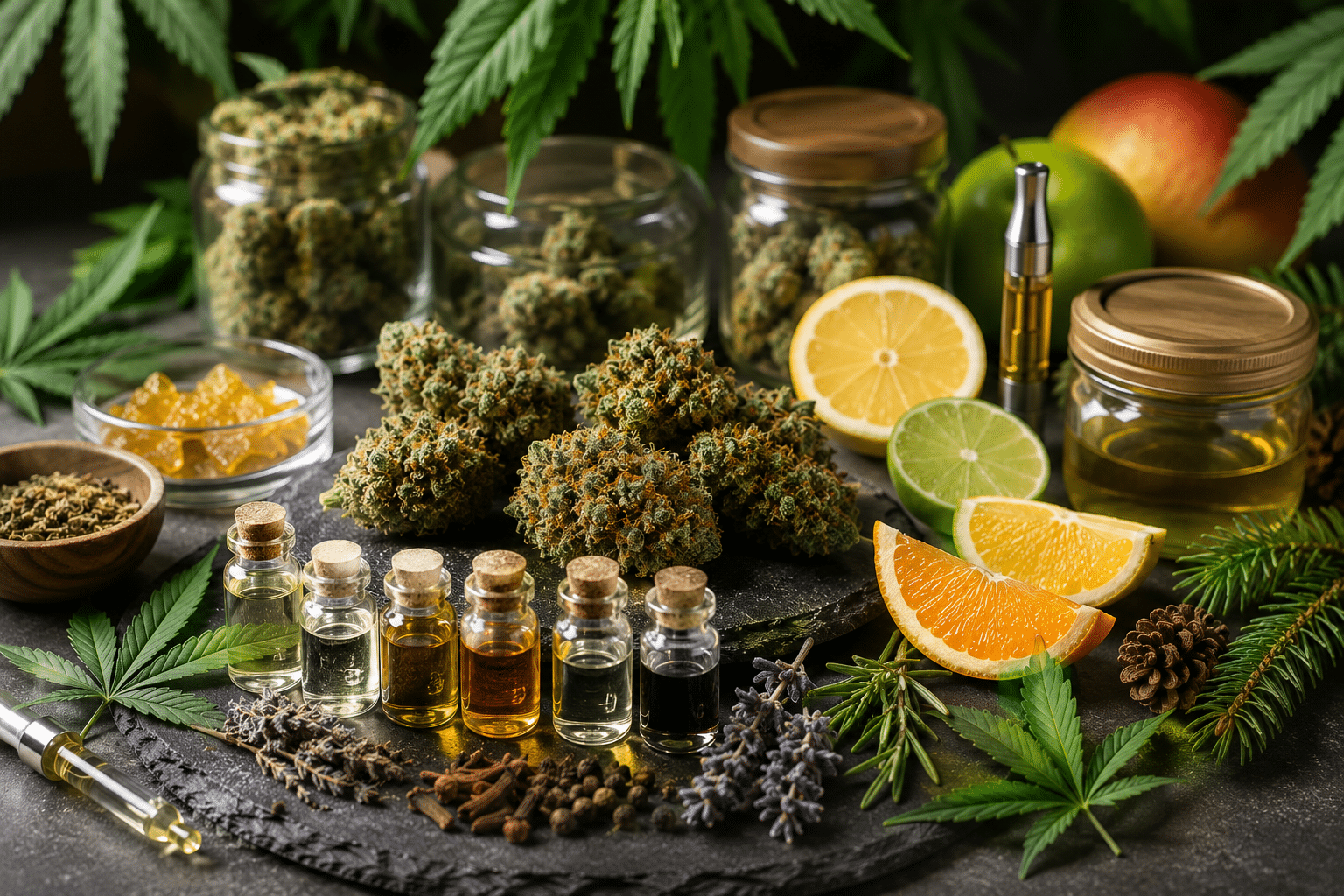
When people explore cannabis, THC and CBD often receive most of the attention. Yet cannabinoids are only part of what gives each cannabis cultivar its distinctive character. Cannabis Terpenes are aromatic compounds responsible for many of the citrus, pine, berry, floral, earthy, spicy, and fuel-like scents associated with different cannabis products.
Terpenes aren’t unique to cannabis. They’re found throughout nature, including in lemons, lavender, pine trees, herbs, and countless other plants. In cannabis, however, the combination and concentration of different terpenes contribute to the recognizable aroma and flavour of individual cultivars.
Understanding Cannabis Terpenes can therefore help adult consumers shop beyond simple indica, sativa, and THC labels. This guide explores common terpenes, their aromas, potential characteristics, and how to identify a terpene profile that suits your preferences.
What Are Cannabis Terpenes?
Terpenes are naturally occurring aromatic compounds produced by many plants. They’re responsible for much of the fragrance associated with flowers, herbs, fruits, trees, and spices.
Cannabis plants produce terpenes in resin glands called trichomes—the same structures associated with cannabinoids such as THC and CBD.
A cannabis cultivar may contain numerous terpenes, although several typically appear in greater concentrations than others. These dominant compounds can strongly influence the plant’s aroma and flavour.
For example, one cultivar might have an intensely citrus-forward profile, while another smells like pine, pepper, berries, or fresh herbs.
This diversity is one reason Cannabis Terpenes have become increasingly important to consumers interested in understanding what makes cannabis products different.
Why Do Cannabis Terpenes Matter?
Imagine choosing coffee solely by caffeine content while ignoring roast, origin, aroma, and flavour. Choosing cannabis exclusively by THC percentage can be similarly limiting.
Two cannabis products containing comparable THC levels can smell and taste dramatically different.
Terpenes help create those distinctions.
Consumers may also report different subjective experiences with products containing different terpene and cannabinoid combinations. Researchers continue to investigate how these compounds may interact, but many popular claims about specific terpenes producing guaranteed effects remain more definitive than current evidence supports.
The safest approach is to view Cannabis Terpenes primarily as important contributors to aroma and flavour while recognizing that their broader biological roles continue to be studied.
Myrcene: Earthy and Herbal
Myrcene is frequently discussed as one of the most common cannabis terpenes.
Its aroma is generally described as earthy, musky, herbal, and slightly spicy. Myrcene also occurs naturally in plants and foods such as hops and mangoes.
Cannabis cultivars containing significant myrcene concentrations often have deep, earthy aromas rather than bright citrus or floral profiles.
Myrcene is frequently associated in cannabis culture with relaxing experiences, but terpene content alone cannot reliably predict how a product will affect a particular individual.
Consumers who appreciate traditional earthy cannabis aromas may nevertheless want to look for myrcene-rich profiles.
Limonene: Bright and Citrusy
As its name suggests, limonene is strongly associated with citrus aromas.
It’s naturally present in the peels of lemons, oranges, and other citrus fruits. In cannabis, limonene can contribute sharp lemon, orange, sweet citrus, or slightly tangy characteristics.
Cultivars rich in limonene can smell remarkably fresh and vibrant.
Limonene is often marketed as uplifting or energizing, and scientists have investigated several potential biological properties of the compound. However, consumers shouldn’t assume that every limonene-rich cannabis product will create the same mood or experience.
For flavour-focused shoppers, limonene is an excellent terpene to explore if citrus is a favourite.
Pinene: Fresh Forest Aroma
Pinene produces one of nature’s most recognizable aromas.
Found in pine trees, rosemary, basil, and other plants, pinene contributes fresh, woody, forest-like scents.
Cannabis products containing noticeable pinene concentrations may smell like pine needles, herbs, or fresh outdoor greenery.
Alpha-pinene and beta-pinene are commonly discussed forms of this terpene.
Like many Cannabis Terpenes, pinene is frequently associated online with specific effects. Those claims should be approached cautiously because the overall cannabis experience depends on considerably more than one aromatic compound.
Nevertheless, people who enjoy crisp, botanical cannabis flavours may appreciate pinene-rich cultivars.
Caryophyllene: Pepper and Spice
Beta-caryophyllene is particularly interesting because of its distinctive spicy character.
It’s also found naturally in black pepper, cloves, and cinnamon. Cannabis containing significant caryophyllene can therefore develop peppery, woody, spicy, or slightly warm aromas.
Unlike many terpenes, beta-caryophyllene can interact with cannabinoid CB2 receptors, making it an especially interesting subject of scientific research.
That doesn’t mean a caryophyllene-rich cannabis product should be considered a medical treatment.
From a sensory perspective, however, this terpene can provide a wonderfully complex contrast to sweeter or fruitier compounds.
Linalool: Floral and Delicate
Anyone familiar with lavender may already recognize the general character of linalool.
This aromatic compound is known for floral, soft, and sometimes slightly spicy characteristics. It’s found in lavender and various other plants as well as cannabis.
Linalool-rich cannabis may offer a noticeably different aroma from cultivars dominated by citrus or fuel-like notes.
It is often associated with calming experiences in cannabis marketing and popular culture. Research continues into linalool’s biological properties, but a specific terpene concentration shouldn’t be treated as a guarantee of a particular effect.
For consumers who appreciate floral profiles, linalool is worth discovering.
Terpinolene: Complex and Fresh
Terpinolene can be difficult to describe because its aroma combines several characteristics.
Depending on the surrounding compounds, it may smell fresh, floral, herbal, citrusy, woody, or slightly sweet.
It’s found in plants including apples, tea trees, cumin, and lilacs.
Terpinolene isn’t always the most dominant of the commonly discussed Cannabis Terpenes, but when present in meaningful concentrations, it can add substantial complexity to a cultivar’s aroma.
Consumers who enjoy unusual, layered flavour profiles may find terpinolene-rich products particularly interesting.
Humulene: Woody and Hoppy
Humulene is strongly associated with hops, one reason certain cannabis cultivars can occasionally display aromas reminiscent of beer ingredients.
Its scent can be described as earthy, woody, herbal, and subtly spicy.
Humulene sometimes appears alongside caryophyllene, creating complex herbal and peppery profiles.
Rather than producing intense fruit sweetness, humulene can contribute depth and a more traditional botanical character.
Consumers interested in earthy or hoppy cannabis aromas may want to pay attention when this terpene appears in product information.
Ocimene: Sweet and Herbal
Ocimene is another terpene found in numerous plants.
Its aroma is often described as sweet, herbal, fresh, tropical, or slightly woody. It can contribute bright complexity when combined with citrus and floral terpenes.
As with other Cannabis Terpenes, its presence should primarily be considered part of the product’s overall aromatic profile rather than a reliable predictor of effects.
Learning to recognize compounds such as ocimene can make comparing cannabis cultivars considerably more interesting.
What Is a Terpene Profile?
A terpene profile describes the combination and relative concentration of terpenes present in a cannabis product.
Instead of asking whether a cultivar “has limonene,” consider which terpenes dominate and how they interact aromatically.
For example, a product might contain:
Myrcene + Caryophyllene + Humulene
This combination could contribute an earthy, herbal, peppery character.
Another might contain:
Limonene + Pinene + Caryophyllene
That profile could produce citrus, pine, and spice characteristics.
It’s the combination—not merely one terpene—that helps create the overall aroma and flavour.
Cannabis Terpenes and the Entourage Effect
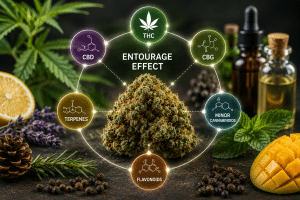
The “entourage effect” is a popular concept suggesting that cannabinoids, terpenes, and other cannabis compounds may interact to influence the overall experience.
It’s an interesting area of research, but consumers should distinguish scientific investigation from marketing claims.
There isn’t enough evidence to confidently predict an individual’s cannabis experience simply by looking at a terpene label.
THC, CBD, minor cannabinoids, dosage, consumption method, tolerance, personal biology, and expectations can all matter.
Cannabis Terpenes should therefore be viewed as one part of a much larger chemical picture.
Terpenes vs. Indica and Sativa
Traditional cannabis shopping frequently relies on three broad categories: indica, sativa, and hybrid.
These labels remain familiar and useful for organizing products, but they aren’t perfect predictors of chemical composition or effects.
Modern cannabis genetics can be extremely complex.
Two products labeled “indica” may have different cannabinoid concentrations and terpene profiles. Likewise, two cultivars marketed as sativas may smell and feel noticeably different.
Examining cannabinoid and terpene information can provide consumers with additional context beyond these traditional classifications.
How to Find the Right Terpene Profile
Finding your preferred profile often involves experimentation and observation.
Start with aroma and flavour preferences. If you love citrus, explore limonene-forward products. If fresh pine appeals to you, look for pinene. Earthy cannabis enthusiasts may enjoy myrcene, while consumers who prefer pepper and spice can investigate caryophyllene-rich products.
Keep track of products you particularly enjoy.
Instead of remembering only the strain name, note the dominant Cannabis Terpenes when that information is available.
Over time, patterns may emerge.
You may discover that several favourite products share similar terpene combinations even though they have completely different strain names.
Why Terpene Testing Matters
Laboratory information can provide valuable insight into cannabis composition.
When terpene testing is available, it may identify the dominant terpenes and their relative concentrations.
This information helps consumers compare products more objectively than relying exclusively on marketing descriptions such as “fruity” or “relaxing.”
However, terpene levels can vary between harvests of the same cultivar because cultivation, genetics, harvesting, curing, and storage all influence chemical composition.
For that reason, current batch information can be more useful than assuming every version of a strain will be identical.
Storage Can Affect Cannabis Terpenes
Terpenes are volatile compounds, meaning they can degrade or evaporate under unsuitable conditions.
Heat, excessive light, oxygen, and poor storage can gradually reduce aromatic quality.
Cannabis should generally be stored in suitable sealed containers away from excessive heat and direct sunlight. Always follow manufacturer storage instructions when provided.
Proper storage can help maintain the aroma and flavour that make terpene-rich cannabis distinctive.
Cannabis products should also remain securely stored away from children and pets.
Benefits of Understanding Cannabis Terpenes
Learning about Cannabis Terpenes can make cannabis shopping more informed and personalized.
Instead of chasing the highest THC percentage, consumers can explore products based on aroma, flavour, cannabinoid composition, and individual preferences.
Terpene knowledge can also make it easier to understand why certain cannabis products smell remarkably different despite having similar THC levels.
Perhaps most importantly, it encourages consumers to think about cannabis as a chemically diverse plant rather than a product defined by a single potency number.
Final Thoughts on Cannabis Terpenes
Cannabis Terpenes are an important part of what makes cannabis so diverse. From the citrus brightness of limonene and forest-like freshness of pinene to myrcene’s earthy character, caryophyllene’s peppery spice, and linalool’s floral aroma, these compounds help create the distinctive personality of different cannabis cultivars.
While terpenes are often associated with particular effects, consumers should avoid treating those associations as guarantees. Cannabis experiences depend on cannabinoid content, dosage, tolerance, consumption method, individual biology, and numerous other variables.
Instead, use terpene information as another tool for understanding and comparing products. Learn which aromas and flavours you enjoy, examine dominant terpene combinations when testing information is available, and keep track of profiles that consistently match your preferences.
For Canadian adults interested in exploring terpene-rich cannabis products, Supreme Dispensary is an online dispensary worth considering. With a diverse cannabis selection that makes it easier to explore different strains, aromas, flavours, and product categories, Supreme Dispensary provides a convenient destination for discovering Cannabis Terpenes and finding profiles that suit your individual preferences, subject to applicable cannabis laws and age requirements.